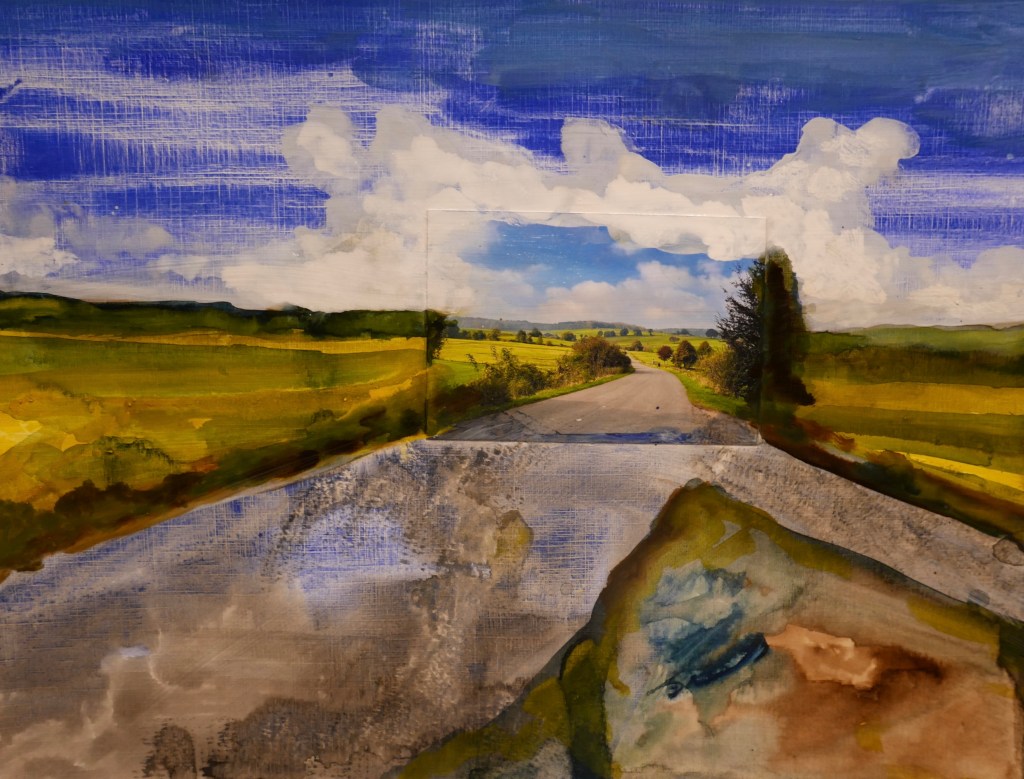
¡Las figuras del campo sobre el cielo!
Dos lentos bueyes aran
en un alcor, cuando el otoño empieza,
y entre las negras testas doblegadas
bajo el pesado yugo,
pende un cesto de juncos y retama,
que es la cuna de un niño;
y tras la yunta marcha
un hombre que se inclina hacia la tierra.
y una mujer que en las abiertas zanjas
arroja la semilla.
Bajo una nube de carmín y llama,
en el oro fluido y verdinoso
del poniente, las sombras se agigantan.
De gestalten in het veld onder de hemel!
Twee trage ossen ploegen
op een heuvel, aanvang herfst,
en tussen de zwarte gebogen koppen
onder het zware juk,
hangt een mand van riet en brem,
die de wieg is van een kind;
en achter het span loopt
een man die zich buigt naar de aarde,
en een vrouw die in de geopende voren
het zaad strooit.
Onder een wolk van karmijn en vuur
in het vloeiende en groenige goud
van het Westen, groeien hun schaduwen tot giganten.
A José María Palacio
Palacio, buen amigo,
¿está la primavera
vistiendo ya las ramas de los chopos
del río y los caminos? En la estepa
del alto Duero, primavera tarda.
¡pero es tan bella y dulce cuando llega!…
¿Tienen los viejos olmos
algunas hojas nuevas?
Aún las acacias estarán desnudas
y nevados los montes de las sierras.
¡Oh mole del Moncayo blanca y rosa.
allá, en el cielo de Aragón, tan bella!
¿Hay zarzas florecidas
entre las grises peñas.
y blancas margaritas
entre la fina hierba?
Aan José María Palacio
Palacio, waarde vriend,
kleedt het voorjaar al de takken
van de peppels langs de wegen
en rivieren? Op de dorre hoogte
van de Duero toeft de lente nog,
maar als ze komt: hoe lieflijk, hoe mooi!
Hebben de oude olmen
al nieuwe blaren?
De acacia’s zijn vast nog naakt
en besneeuwd de bergkammen.
Hoe schoon verheft zich de Moncayo,
*
wit en roze tegen de hemel van Aragon!
Bloeien er bramen
tussen de grijze rotsen
en witte madeliefjes
tussen het tere gras?
(Vertaling Robert Lemm)
*
Moncayo, berg op de grens van de provincies Soria en Zaragoza. (vert.)
To José María Palacio
Palacio, my dear friend,
is spring already
covering the poplar branches
by the river and the roads? On the plain
of the upper Douro, spring comes late,
but it’s so soft and lovely when it arrives!
Do the old elms
have some new leaves?
Even though the acacias are still bare
and the mountain tops clad in snow.
Mount Moncayo up there, rosy and white,
so beautiful against the sky of Aragon!
Are brambles coming into flower
among the grey stones,
and white daisies
among the herbs?
Storks will already be landing
on those church steeples.
There will be green wheat
and brown mules in the sown fields,
and labourers sowing late crops
in the April rain. Bees are already
feeding on rosemary and thyme.
Are plum trees in blossom? Are there still violets?
For sure there will be poachers
with partridge decoys under their
long cloaks. Palacio, my dear friend,
are the riversides still full of nightingales?
When the first lilies
and the first roses are in the gardens,
on a blue evening, walk up to El Espino,
to El Espino up on high, where she lies in the earth…
Vertaling Paul Archer
Por esos campanarios
ya habrán ido llegando las cigüeñas.
Habrá trigales verdes
y mulas pardas en las sementeras,
y labriegos que siembran los tardíos
con las lluvias de abril. Ya las abejas
libarán del tomillo y el romero.
¿Hay ciruelos en flor? ¿Quedan violetas?
Furtivos cazadores, los reclamos
de la perdiz bajo las capas luengas,
no faltarán. Palacio, buen amigo,
¿tienen ya ruiseñores las riberas?
Con los primeros lirios
y las primeras rosas de las huertas.
en una tarde azul, sube al Espino,
al alto Espino donde está su tierra…
Baeza, 29 de abril de 1913
Op die klokketorens
moet de eiber nu zijn neergestreken.
Groene graanvelden zullen er zijn
en muildieren in het bouwland
en mannen die de late akkers zaaien
met de regens van april. Doen de bijen
zich te goed aan de tijm en rozemarijn?
Staan de pruimebomen in bloei?
Zijn er nog viooltjes?
Stropers, de lokvogel voor de patrijs
onder de jas gestoken, laten zich vast
niet onbetuigd. Palacio, goede vriend,
zijn er al nachtegalen aan de oevers?
Met de eerste leliën
en de eerste rozen in de gaarden
beklimt hij op een blauwe avond de Espino,
*de hoge Espino waar hij vandaan komt…
(Baeza, 29 april 1913)
*Espino, mogelijk een bergtop in de provincie Soria. (vert.)
Retrato
Mi infancia son recuerdos de un patio de Sevilla,
y un huerta claro donde madura el limonero:
mi juventud, veinte años en tierra de Castilla:
mi historia, algunos casos-que recordar no quiero.
Ni un seductor Mañara, ni un Bradomin he sido
-ya conocéis mi torpe aliña indumentario -.
mas recibí la flecha que me asignó Cupido,
y amé cuanto ellas puedan tener de hospitalario.
Hay en mis venas gotas de sangre jacobina,
pero mi verso brota de manantial sereno;
y, más que un hombre al uso que sabe su doctrina,
soy, en el buen sentido de la palabra, bueno.
Adoro la hermosura, y en la moderna estética
corté las viejas rosas del huerto de Ronsard;
mas no amo los afeites de la actual cosmética,
ni soy un ave de esas del nuevo gay-trinar.
Desdeño las romanzas de los tenores huecos
y el coro de los grillos que cantan a la luna.
A distinguir me paro las voces de los ecos.
y escucho solamente, entre las voces, una.
¿Soy clásico o romántico? No sé. Dejar quisiera
mi verso, como deja el capitán su espada:
famosa por la mano viril que la blandiera,
no por el docto oficio del forjador preciada.
Converso con el hombre que siempre va conmigo
-quien habla solo espera hablar a Dios un día -;
mi soliloquio es plática con este buen amigo
que me enseñó el secreto de la filantropía.
Y al cabo, nada os debo; debéisme cuanto he escrito.
A mi trabajo acudo, con mi dinero pago
el traje que me cubre y la mansión que habito,
el pan que me alimenta y el lecho en donde yago.
Y cuando llegue el dia del último viaje,
y esté al partir la nave que nunca ha de tornar,
me encontraréis a bordo ligero de equipaje,
casi desnudo, como los hijos de la mar.
Portret
Mijn kinderjaren zijn herinneringen aan een patio in Sevilla
en een klare gaard waar de citroenboom rijpt;
mijn jeugd, twintig jaren op het land van Castilië;
mijn verleden, wat voorvallen die ik vergeten wil.
Geen verleider als Mañara,
geen Bradomín
ben ik geweest
-gij kent mijn nonchalante plunje immers wel -,
maar ik nam de pijl die Cupido mij bestemde
en wie mij ontvangen wilde heb ik bemind.
Door mijn aren vloeien druppels jacobijns bloed,
maar mijn verzen wellen op uit kalme bron;
en meer dan een modieus man die het om zijn leer gaat,
ben ik, in de goede zin van het woord, goed.
Ik eer de schoonheid, maar in de nieuwe school
plukte ik de oude rozen uit de hof van Ronsard;
ik versmaad de opschik van de laatste mode
en ik ben geen vogel voor het frivole oor.
Ik veracht de romancen van de holle tenoren
en het koor van krekels dat de maan bezingt.
Onderscheiden blijf ik de stemmen van de echo’s
en van de stemmen luister ik maar naar een.
Ben ik klassiek of romantisch? Ik zou ’t niet weten.
Mijn vers geef ik graag zoals de kapitein zijn zwaard:
vermaard om de man die het hanteerde,
niet om de kunde van de smid gewaardeerd.
Ik praat met de man die altijd met mij meegaat
-wie alleen praat hoopt eens met God te spreken -;
mijn monoloog is een gesprek met die kameraad
die mij het geheim van de mensenliefde leerde.
Per slot dank ík u niets; gij dankt míj wat ik schreef.
Ik doe mijn werk, met mijn geld betaal ik
het pak dat me kleedt en het huis waar ik woon,
het brood dat me voedt en het bed dat ik beslaap.
En als de dag mocht komen van de laatste reis
en het schip gaat vertrekken dat nooit wederkeert
zult gij mij aan boord vinden met weinig bagage,
bijna naakt, zoals de kinderen van de zee.
*Mañara, een zeventiende-eeuwse Don Juan die zich bekeerde en als een kuise monnik stierf.
*Bradomín, een personage van Valle-Inclán, een decadente Don Juan.
Zelfportret
Mijn kindertijdherinnering: een patio in Sevilla,
een boomgaard in de zon, citroenen tussen blad;
mijn jeugd is het relaas van twintig jaar Castilla,
waar dingen zijn gebeurd die ’k nu het liefst vergat.
Nooit ben ik een Don Juan geweest: ’t is niet mijn stijl
en jullie weten best hoe slonzig ik mij kleed.
Toch weet Cupido mij te treffen met zijn pijl
en heb ik lief wanneer een vrouw mij welkom heet.
Mijn verzen wellen op als een sereen gekabbel,
al stroomt iets jacobijns onrustig in mijn bloed;
meer dan een man van nu, vol doctrinair gebabbel,
ben ’k in de goede zin van ’t woord alleen maar goed.
Ik houd van schoonheid, heb, in de moderne esthetica,
in perken van Ronsard de rozen afgesneden,
moet weinig hebben van de klinkende kosmetica
van nu en tsjilp niet mee met zangvogels van heden.
Mij doen de liedjes niets van ijdele tenoren
en van het krekelkoor dat krast onder de maan.
Ik tracht waar echo’s zijn de stemmen zelf te horen,
al is er maar één stem waarop ik acht wil slaan.
Romantisch of klassiek? Ik weet het niet. Ik deed
mijn vers liefst af zoals de zwaardvechter zijn zwaard,
dat, meer dan door de kunst van wie het heeft gesmeed,
door de viriele hand des dragers roem vergaart.
Ik spreek graag met de man met wie ik alles meemaak
—wie met zichzelf praat heeft de heimelijke wens,
met God te praten—; mijn alleenspraak is een tweespraak
met wie mij heeft geleerd, te houden van de mens.
U gaf mij niets; ik ú de verzen die ik schreef.
Ik doe getrouw mijn werk, betaal uit eigen zak
de kleding die ik draag, het brood waarvan ik leef,
het bed waarin ik lig, mijn woonhuis en mijn dak.
Als van de laatste reis weldra de ochtend gloort
en ’t schip dat nimmer keert gereed staat voor vertrek,
dan zal ik lichtbepakt te vinden zijn aan boord,
zoals een zoon der zee, ja vrijwel naakt, aan dek.
Antonio Machado. Gedichten. Herdicht door Erik Coenen.
Uitgeverij De Wilde Tomaat, 2020
Portrait
My childhood memories are of a patio in Seville
and a sunny garden where lemon trees ripened;
twenty years of my youth were spent in the lands of Castile;
the story of my life has some things I’d rather not remember.
I’ve not been a womaniser like Mañara or Bradomín
-you all know about my hopeless dress sense –
instead I received the arrows assigned to me by Cupid
and loved the generous kindness they came from.
There are drops of Jacobin blood in my veins,
but my verse flows from a serene spring;
and, more than those who are slaves to doctrine,
I am, in the true sense of the word, a good man.
I adore beauty, and use a modern aesthetic style
to cut the old roses in the garden of Ronsard;
but I’m not a fan of the latest affectations,
nor am I one of those birds that finds new ways to sing.
I scorn the romantic ballads of vacuous tenors
and the chorus of crickets that sings to the moon.
I stopped distinguishing voices from echoes,
and only hear, among the voices, one.
Am I classical or romantic? I don’t know. I wish
to leave my verse as a captain leaves his sword:
famous for the manly hand that wielded it,
rather than for the worthy blacksmith’s expertise.
I talk to the man that always walks beside me
-no-one talks solely in the hope of talking to God one day;
my soliloquy is a chat with that good friend
who taught me the secret of doing good unto others.
Above all, I owe you nothing; you owe me for what I’ve written.
I go about my work, earning the money to pay
for the clothes that cover me and the house I live in,
the bread that feeds me and the bed where I sleep.
And when the day of the last journey arrives,
and the ship is leaving that never turns back,
you will find me onboard, travelling light,
almost naked, like the children of the sea.
English translation by Paul Archer
Daba el reloj las doce… y eran doer
golpes de azada en tierra…
¡Mi hora! – grité – … El silencio
me respondió: – No temas:
tú no verás caer la última gota
que en la clepsidra tiembla.
Dormirás muchas horas todavia
sobre ta ocilla vieja,
y encontratás una mañana pura
amarrada tu barca a otra ribera.
De klok sloeg twaalf… en het waren
twaalf slagen van spade op aarde…
‘Mijn tijd!’ riep ik uit… De stilte
antwoordde mij: ‘Vrees niet,
als de laatste druppel die trilt in
de waterklok valt, zie jij ’t niet.
Nog vele uren slapen
op de oude oever zul jij –
en dan, op een pure ochtend,
ligt je boot aan de overzij.’
(Vertaling Peter Verstegen)

Del pasado efímero
Este hombre del casino provinciano
que vio a Carancha recibir un día,
tiene mustia la tez, el pelo cano,
ojos velados por melancolía;
bajo el bigote gris, labios de hastío,
y una triste expresión, que no s tristeza,
sino algo más y menos: el vacío
del mundo en la oquedad de su cabeza.
Aún luce de corinto terciopelo
chaqueta y pantalón abotinado,
y un cordobés color de caramelo,
pulido y torneado.
Tres veces heredó; tres ha perdido
al monte su caudal; dos ha enviudado.
Sólo se anima ante el azar prohibido,
sobre el verde tapete reclinado,
o al evocar la tarde de un torero,
la suerte de un tahúr, o si alguien cuenta
la hazaña de un gallardo bandolero,
o la proeza de un matón, sangrienta.
Bosteza de política banales
dicterios al gobierno reaccionario,
y augura que vendrán los liberales,
cual torna la cigüeña al campanario.
Un poco labrador, del cielo aguarda
y al cielo teme; alguna vez suspira,
pensando en su olivar, y al cielo mira
con ojo inquieto, si la lluvia tarda.
Lo demás, taciturno, hipocondriaco,
prisionero en la Arcadia del presente,
le aburre; sólo el humo del tabaco
simula algunas sombras en su frente.
Este hombre no es de ayer ni es de mañana,
sino de nunca; de la cepa hispana
no es el fruto maduro ni podrido,
es una fruta vana
de aquella España que pasó y no ha sido,
esa que hoy tiene la cabeza cana.
From the ephemeral past
This man from the local social club
who once saw the bullfighter Carancha,
has a glum face, grey hair,
eyes veiled by melancholy;
under his grey moustache, weary lips,
and a sad expression, which is not sadness,
but something like it: the emptiness
of the world in the hollow of his head.
He still cuts a dash in a maroon velvet
jacket and buttoned breeches
and a Cordoba hat of caramel colour,
looking refined and smart.
Three times he inherited money; three times
lost the lot; twice widowed.
He only brightens up at an illegal gamble,
lounging at the green baize,
or when evoking the feats of a bullfighter,
the luck of a thief, or when someone
recounts the derring-do of a brave outlaw,
or the blood-soaked acts of a thug.
He yawns about politics, uselessly
taunts the reactionary government,
and predicts the liberals will come to power,
just as the stork returns to the bell-tower.
Something of a farmer, he eyes the heavens
and fears them; and at times he sighs,
thinking about his olive grove, and looks up
with an anxious eye if the rain is late in coming.
The rest of the time, he is taciturn, hypochondriac,
prisoner in the paradise of the present,
bored; with only cigarette smoke
casting false shadows on his brow.
This man is neither of yesterday nor tomorrow,
but of never; coming from Spanish stock
he is not the ripe fruit nor the rotten fruit,
he is the worthless fruit
of a Spain that’s gone and hasn’t been,
and is now grey haired.
English translation by Paul Archer
https://www.poetryfoundation.org/poets/antonio-machado
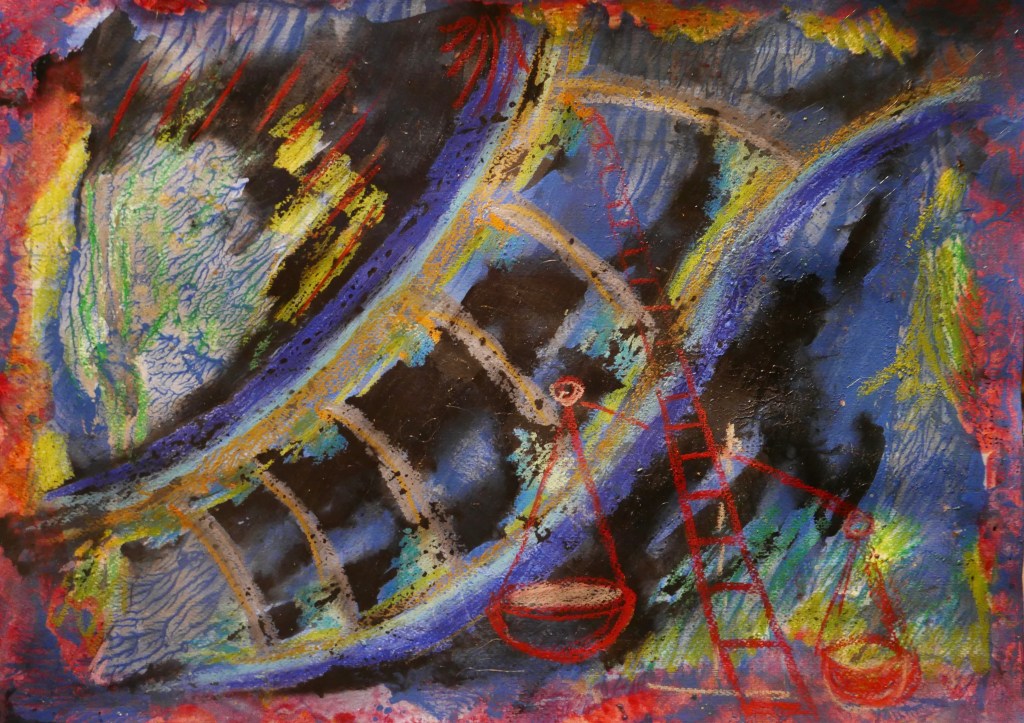
La Saeta
Dijo una voz popular:
¿Quién me presta una escalera,
para subir al madero
para quitarle los clavos
a Jesús el Nazareno?
¡Oh la saeta, el cantar
al Cristo de los gitanos,
siempre con sangre en las manos,
siempre por desenclavar!
Cantar del pueblo andaluz,
que todas las primaveras
anda pidiendo escaleras
para subir a la cruz!
¡Cantar de la tierra mía,
que echa flores
al Jesús de la agonía,
y es la fe de mis mayores!
¡Oh, no eres tú mi cantar!
¡No puedo cantar, ni quiero,
a ese Jesús del madero,
sino al que anduvo en el mar!
The Arrow
Said a popular voice:
“Who can lend me a ladder,
to climb the tree
to remove the nails
to Jesus the Nazarene?”
Oh the arrow, the singing
to the Christ of the gypsies,
always with blood in the hands
always for taking nails off!
Song of the Andalusian people
that every spring
is asking for ladders
to climb up the cross!
Song of my land,
that throws flowers
to the Jesus of agony,
and it’s the faith of my elders!
Oh, you are not my song!
I can’t sing, nor do I want to,
to that Jesus on the wood,
but to the one who walked in the sea!
De Saeta
Wie leent me een ladder,
om naar het hout te klimmen
en de spijkers te verwijderen
van Jezus de Nazarener?
O, de saeta! Het lied
voor de Christus van de zigeuners,
altijd met bloed aan de handen,
altijd om te ontbinden!
Lied van het Andalusische volk,
dat elke lente
ladders vraagt
om naar het kruis te klimmen!
Zingen over mijn land
dat bloeit
voor de Jezus van de pijn
het is het geloof van mijn ouderen!
O, niet voor mij is dit lied!
Ik kan niet zingen, noch wil ik het
aan deze Jezus van het hout
maar voor hem die in de zee liep!
(vertaling: Jules Grandgagnage, 2024)
Deletreos de Armonía
Deletreos de armonía
que ensaya inexperta mano.
Hastío. Cacofonía
del sempiterno piano
que yo de niño escuchaba
soñando… no sé con qué,
con algo que no llegaba,
todo lo que ya se fue.
Harmony Spellings
Harmony spellings
rehearsed by an inexperienced hand.
Weariness. Cacophony
of the everlasting piano
that I used to listen to as a child
dreaming … I don’t know with what,
with something that didn’t arrive,
everything that is already gone.
Anoche Cuando Dormía
Anoche cuando dormía
soñé, ¡bendita ilusión!,
que una fontana fluía
dentro de mi corazón.
Di: ¿por qué acequia escondida,
agua, vienes hasta mí,
manantial de nueva vida
en donde nunca bebí?
Anoche cuando dormía
soñé, ¡bendita ilusión!,
que una colmena tenía
dentro de mi corazón;
y las doradas abejas
iban fabricando en él,
con las amarguras viejas,
blanca cera y dulce miel.
Anoche cuando dormía
soñé, ¡bendita ilusión!,
que un sol ardiente lucía
dentro de mi corazón.
Era ardiente porque daba
calores de rojo hogar,
y era sol porque alumbraba
y porque hacía llorar.
Anoche cuando dormía
soñé, ¡bendita ilusión!,
que era Dios lo que tenía
dentro de mi corazón.
Last Night While I Was Sleeping
Last night while I was sleeping
I dreamed, blessed illusion!
that a fountain flowed
inside my heart.
Say: through which hidden ditch,
water, you come to me,
spring of new life
where I never drank?
Last night while I was sleeping
I dreamed, blessed illusion!
that I had a hive
inside my heart;
and the golden bees
were manufacturing in it,
with the old bitterness,
white wax and sweet honey.
Last night while I was sleeping
I dreamed, blessed illusion!
that a burning sun shone
inside my heart.
It was hot because it gave
heats of red home,
and it was sun because it lit up
and because it made them cry.
Last night when I was sleeping
I dreamed, blessed illusion!
that it was God who I had
inside my heart.
¿Y ha de Morir Contigo…?
¿Y ha de morir contigo el mundo mago
donde guarda el recuerdo
los hálitos más puros de la vida,
la blanca sombra del amor primero,
la voz que fue a tu corazón, la mano
que tú querías retener en sueños,
y todos los amores
que llegaron al alma, al hondo cielo?
¿Y ha de morir contigo el mundo tuyo,
la vieja vida en orden tuyo y nuevo?
¿Los yunques y crisoles de tu alma
trabajan para el polvo y para el viento?
And Must It Die With You…?
And must the magical world die with you,
where the memory keeps
the purest breaths of life,
the white shadow of love first,
the voice that went to your heart,
the hand that you wanted to hold in dreams,
and all the loves
that reached the soul, to the deep sky?
And must your world die with you,
the old life in order yours and new?
Do the anvils and crucibles of your soul
work for the dust and for the wind?
Vertaling Paul Archer
Para tu Ventana
Para tu ventana
un ramo de rosas me dio la mañana.
Por un laberinto, de calle en calleja,
buscando, he corrido, tu casa y tu reja.
Y en un laberinto me encuentro perdido
en esta mañana de mayo florido.
¡Dime dónde estás!
Vueltas y revueltas,
ya no puedo más.
For Your Window
For your window
a bouquet of roses gave me the morning.
Through a labyrinth, from street to alley,
searching, I have run, your house and your fence.
And in a maze I find myself lost
on this flowery May morning.
Tell me where you are!
Round and round
I can’t anymore.
Vertaling Paul Archer
Dice la Razón
Dice la razón: busquemos la verdad.
Y el corazón: vanidad,
la verdad ya la tenemos.
La razón: ¡ay, quién alcanza la verdad!
El corazón: vanidad;
la verdad es la esperanza.
Dice la razón: tú mientes.
Y contesta el corazón: quien miente
eres tú, razón, que dices
lo que no sientes.
La razón: jamás podremos entendernos,
corazón. El corazón: lo veremos.
Says The Reason
Says the reason: let’s look for the truth.
And the heart: vanity,
we already have the truth.
The reason: oh, who can reach the truth!
The heart: vanity;
the truth is hope.
The reason says: you lie.
And the heart answers: who lies
it’s you, reason, ‘cause you say
what you don’t feel.
The reason: we will never understand each other,
heart. The heart: we will see.
Vertaling Paul Archer
Si Yo Fuera un Poeta
Si yo fuera un poeta
galante, cantaría
a vuestros ojos un cantar tan puro
como en el mármol blanco el agua limpia.
Y en una estrofa de agua
todo el cantar sería:
“Ya sé que no responden a mis ojos,
que ven y no preguntan cuando miran,
los vuestros claros, vuestros ojos tienen
la buena luz tranquila,
la buena luz del mundo en flor, que he visto
desde los brazos de mi madre un día”.
If I Was a Poet
If I was a poet
gallant, would sing
in your eyes a song so pure
as clean water in white marble.
And in a stanza of water
all the singing would be:
“I know that they don’t answer to my eyes,
who see and don’t ask when they look,
your clear ones, your eyes have
the good quiet light,
the good light of the world in bloom, that I have seen
from my mother’s arms one day.”
Vertaling Paul Archer
Todo pasa y todo queda,
pero lo nuestro es pasar,
pasar haciendo caminos,
caminos sobre el mar.
Nunca persequí la gloria,
ni dejar en la memoria
de los hombres mi canción;
yo amo los mundos sutiles,
ingrávidos y gentiles,
como pompas de jabón.
Me gusta verlos pintarse
de sol y grana, volar
bajo el cielo azul, temblar
súbitamente y quebrarse…
Nunca perseguí la gloria.
Caminante, son tus huellas
el camino y nada más;
caminante, no hay camino,
se hace camino al andar.
Al andar se hace camino
y al volver la vista atrás
se ve la senda que nunca
se ha de volver a pisar.
Caminante no hay camino
sino estelas en la mar…
Hace algún tiempo en ese lugar
donde hoy los bosques se visten de espinos
se oyó la voz de un poeta gritar
“Caminante no hay camino,
se hace camino al andar…”
Golpe a golpe, verso a verso…
Proverbs and Songs
Everything passes and everything stays,
but our thing is to pass,
pass by making paths,
paths over the sea.
I never chased after the glory
nor leave in memory
of men my song;
I love the subtle worlds
weightless and gentle,
like soap bubbles.
I like to see them paint themselves
of sun and scarlet,
Fly under the blue sky,
Shake suddenly and break …
I never chased after the glory.
Walker, your footprints
are the road and nothing else;
walker, there is no path,
the path is made by walking.
When you walk, you make a path
And when you look back
you see the path that will never
be stepped on again.
Walker there is no path
but wakes in the sea…
Some time ago in that place
where today the forests are dressed in thorns
a poet’s voice was heard shouting
“Walker there is no path,
the path is made by walking … “
Blow by blow, verse by verse …
Vertaling Paul Archer
You will Sing…
by Antonio Machado
Everything happens and everything is,
but our thing is to pass,
spend making paths,
paths over the sea.
I never chased glory
nor leave in memory
of men my song;
I love the subtle worlds,
weightless and gentle,
like soap foam.
I like to see them paint
sun and scarlet, fly
under the blue sky, tremble
suddenly and break…
I never chased glory.
Walker, are your footprints
the road and nothing else;
walker, there is no path,
path is made by walking.
When you walk, you make your way
and looking back
you see the path that never
must be stepped on again.
walker there is no way
but wakes in the sea…
Some time ago in that place
where today the forests are dressed in thorns
a poet’s voice was heard shouting
“Walker there is no way,
the path is made by walking…”
Blow by blow, verse by verse…
He died the poet away from home.
Dust from a neighboring country covers him.
As they walked away they saw him cry.
“Walker there is no way,
the path is made by walking…”
Blow by blow, verse by verse…
When the finch can not sing.
When the poet is a pilgrim,
when it is useless to pray.
“Walker there is no way,
the path is made by walking…”
Blow by blow, verse by verse.
Vertaling Paul Archer

Hartstocht en berekening
Vlucht voor de vredige en armzalige min
Die wil dat zij gevaarloos, onverblind,
Een vast bezit langs effen wegen wint,
Want liefde vindt in waanzin eerst haar zin.
Wie ’t schoon geheim van ’t steeds hernieuwd begin
Belastert, wijl zo ras ’t wild heil verzwindt,
Zich harnast voor ’t pijlschietend vliegend kind,
Wenst as, met welbeschermd zacht vuur daarin.
En eens, doch zonder vuur, gewordt hem as,
Wen hij de dwaasheid zijner dwaling leert,
Die, waar geen bloesem was, de vrucht begeert.
Met zwarte sleutel zal hij dor, verstard,
Zijn koud vertrek ontsluiten; – ’t spiegelglas
Vertroebeld, eenzaam ’t bed en ledig ’t hart.
(Vert. Hendrik de Vries)
In Granada gebeurde deze misdaad
- De Misdaad
Men zag hem gaan, tussen geweren schrijdend
de lege straat door
naar het kale veld
waar nog de sterren van de morgen blonken.
Zij hebben Federico gedood
eer het licht van de morgen daagde.
Het peloton van de beulen
Dorst hem niet in ’t gelaat zien.
Allen sloten de ogen
Zij baden – geen God zal je redden!
Dood viel Federico ter aarde,
lood in zijn ingewanden, bloed op zijn hoge voorhoofd.
In Granada gebeurde deze misdaad,
in Granada, hoort gij het? – dat hij liefhad.
2. De dichter en de dood
Men zag hem gaan, schrijdende naast de maaister
en zonder ’t blinken van haar zeis te vrezen.
Reeds blonk de zon op alle torens en de hamers
in alle smidsen hamerden het ijzer
toen daar Federico tot de luisteraarster
woorden van liefde in zijn zoete taal sprak:
omdat nog gisteren in mijn lied, gezellin,
de doffe slag klonk van Uw dorre handen,
omdat gij aan mijn zang Uw koele hartstocht,
uw zilveren sikkelscherpte schonkt aan mijn tragedie
wil ‘k heden vlees om Uw geraamte dichten
en ogen, die Uw aangezicht ontbreken
en haren, die de wilde wind verstrooid heeft
en rode lippen waar men U kan kussen
en samen, mijn zigeunerin, willen wij dwalen.
O, zoete dood! Hoe lief is Uw gezelschap
hier in de zoete lucht van Granada – mijn Granada.
3
Men zag hen schrijden… Laat ons bouwen, vrienden,
van steen en dromen
een dichtergraf daarginds in het Alhambra
bij een fontein van altijd wenend water
dat eeuwig murmelt:
In Granada gebeurde deze misdaad,
in Granada, het zijne… dat hem liefhad.
The Crime was in Granada: to Federico Garcia Lorca
- The crime
He was seen walking between rifles,
down a long street
and out into the cold countryside,
under a few dawn stars.
They murdered Federico
when the sun rose.
The firing squad
didn’t dare to look him in the face.
They all closed their eyes;
they prayed: not even God saves you!
Federico fell dead,
with blood on his brow and lead in his guts?
… you know the crime was in Granada,
poor Granada!? In his Granada.
- The Poet and Death
He was seen walking alone with Death,
not scared of her scythe.
Was the sun already on the towers, the hammers
on anvils? The anvils, the anvils of the forges.
Federico was speaking,
flirting with Death. She was listening.
“Because in my poetry yesterday, my dear friend,
the slap of your dry palms rang out,
and you gave ice to my singing, and gave an edge
to my tragedy with your silver sickle,
I will sing of the flesh that you don’t have,
the eyes that you don’t have.
your tresses tossed in the wind,
your red lips where they kissed you…
Today like yesterday, my gypsy girl, my death,
it’s so good to walk alone with you,
through the air of Granada, my Granada!”
3.
He was seen walking…
My friends, carve
from stone and dream in the Alhambra,
a memorial to the poet,
over a fountain where water weeps,
and forever say:
the crime was in Granada, in his Granada!
English translation by Paul Archer
El amor y la sierra
por agria serranía,
una tarde, entre roca cenicienta.
El plomizo balón de la tormenta
de monte en monte rebotar se oía.
Súbito, al vivo resplandor del rayo,
se encabritó, bajo de un alto pino,
al borde de una peña, su caballo.
A dura rienda le tornó al camino.
Y hubo visto la nube desgarrada.
y, dentro, la afilada crestería
de otra sierra más lueñe y levantada
-relámpago de piedra parecia -.
¿Y vio el rostro de Dios? Vio el de su amada.
Gritó: ¡Morir en esta sierra fria!
De ruiter
Hij voer te paard in een ongastvrij hoogland,
En de avond viel over aschgrauwe rotsen.
De looden kogel van het noodweer dreunde
Van berg tot berg.
Toen, bij een schelle bliksem,
Sloeg ’t paard aan ’t steigren langs een ruw gevaarte,
Onder een pijnboom door.
Met strakke teugel
Trok hem de ruiter naar de weg terug.
Wat had zijn oog aanschouwd? Verflarde wolken.
Daarbinnen de scherptoegespitste toppen
Van andre ketens, verder nog en hooger.
En ’t had geschenen als een steenen weerlicht.
Zag hij ’t gelaat van God? Neen: van zijn liefste.
Hij riep: ‘Te sterven in dat koud gebergte!’
Vertaling Hendrik de Vries
Uit Kastilië
*
De man van deze landen,
zijn pijnboombossen blakend,
En ’t overschot zich eignend,
een oorlogsbuit gelijk,
Trof eertijds eik en steeneik,
in tuimling nederkrakend: –
Onduldbaar, als der gulz’ge
verwenste vooglen wijk;
Ziet nu, verarmd, zijn kindren
op zoek naar nieuwe wegen,
Ziet noodgetij en stormen
de klei aan ’t land ontsleuren,
Langs heilige oude stromen
de wijde zeeën tegen;
Moet nu in woestenijen
verzwerven, zwoegen, treuren.
Zijn afkomst is van drijvers
die dwars door zand en stenen
Hun kudden, hun merino’s,
van graas- tot graasplek leidden
In lange reis naar ’t vruchtbaar
Estremadura henen,
Verguld van ’t gloeiend zonlicht,
vergrauwd van ’t stof der heiden.
Klein, vlug, beweeglijk, duldzaam,
de schuwheid en de sluwheid
In diepverholen ogen,
arglistig, vol mistrouwen;
Zijn hoofd is bonkig, mager;
verweerdheid, hardheid, ruwheid;
Gespannen, strak als bogen,
de zware en ruige brauwen.
Veel kwaad, boosaardig volk huist
in dorpen en daarbuiten,
Verdorven in ’t waanzinnige
en broedend op vergrijpen.
Onmenslijk; grauwe kleren,
verflard en vuil, omsluiten
Een hart waarin de vruchten
der zeven zonden rijpen.
Hun uitzicht immer troebel:
wangunstig neergestoten
n onvertroostbre weedom,
Aan de eigen rampspoed, nimmer
hun rijkdom rein genoten:
Door tegenslag en zegen
gelijklijk wreed gekwelden.
Bloedgierig en gramstorig
is dezer velden wezen:
Bij ’t kwijnen van de zonglans
hoog boven ’t heuvelzwart,
Ziet ge een ontzaglijk paardmens,
boogschutter, uitgerezen:
Een reus die met zijn schichten
de Heer der heemlen tart.
Hier voelt ge, op oorlogsvlakten
en kluiznaarsteppen starend:
Nooit glansde in deze streken
’t oud Paradijs der Schrift.
Vergeten plek der wereld,
een land voor gier en arend,
Met Kaïn’s naspook, warend
in onverwoestbre drift.
Antonio Machado, ‘Por tierras de España.’
Vertaling Hendrik de Vries
De Iberische God
De roekeloze
Boogschutter uit een oude zang gelijk,
Die de Oppergod wou treffen,
Zo zou de zoon van dit Iberisch rijk
Een pijlschot willen richten, om te priemen
Door ’t hart van Hem die hagels neer doet striemen,
Die ’t koren plet en ’t najaarsfruit verderft;
Maar ook een ‘Gloria’ verheffen
Tot Wie zijn zaad laat kiemen:
Tot Hem door Wiens genade hij, uit rogge en weit,
Gezegend brood verwerft.
‘Gij, Heer van de ondergang!
Ik zing Uw lof, omdat ik steeds verlang
En vrees! Ik val voor U in ’t stof te voet
Met mijn ontaard, mijn lasterlijk gemoed.
Heer, door Wiens hulp ik ’t brood opnieuw moog winnen,
Ik weet: in Uw geweld lig ik geboeid.
Heer van de zomerwolk die ’t open veld rammeit,
Heer van de droge herfst, van ’t eindeloze spinnen;
Heer van de hitte die de maïs verschroeit!
Heer van de regenboog, hoog boven ’t steppenduin
Waar ’t schaap op graast! Van vruchten, door de worm
Vervreten! Van de strohut, welke in puin
Omver-geraasd ligt na de wervelstorm!
Uw adem blaast het haardvuur aan,
Uw koestring rijpt het blonde graan;
Gij die de kernen der olijven
In Uw Sint Jansnacht wonderbaar
Tot pitten doet verstijven –
O Meester, Gij, van schaarste en overvloed,
Welvaart en tegenspoed –
Gij die Uw gunstling straft met ledigheid
En Uw verstootling hoop uit smart bereidt –
Heer, Heer: op ’t wispelturig rad van ’t jaar
Is ’t immer-weer dat ik mijn zaaisel strooi.
Wat werp ik anders, met verslaafd gebaar,
Dan spelersgeld, aan toeval’s gril ten prooi?
Geduchte Heer van hemel en van hel,
Van liefde en toorn, van roos en geselroe –
Weer slinger ik, als dobbelsteen bij ’t spel,
U mijn gebed van lof en laster toe.’
Hij die zijn God onteert op zijn outaar,
Geen dreiging meer van ’t noodlot wil verstaan,
Droomde eens van wegen over de oceaan,
En sprak: de Heer zij mij tot weg; ook daar.
Was dit niet hij die boven zoveel strijds
God plaatste als opperst Bondgenoot,
Als enig Heerser, generzijds
Van de aarde, en generzijds van zee en dood?
Schonk hij niet eertijds de uitverkoren tak
Voor ’t Godsvuur, deze Iberische eikestam,
Die laaiend zich aan Liefde’s feest ontstak,
Gelouterd, één met God, in zuivre vlam?
Doch heden! – Wat kan óns ’t verleden zijn?
Voor nieuwe huisgezinnen bloeit en wast
In schaduwrijke bosjes rosmarijn.
Groen hakhout rijst langs eeuwenoude bast.
Nog wacht een vaderland hier ver en wijd
De kromme ploeg, de brede en open voren.
Een zaaiveld, dat het Godlijk graan verbeidt,
Schuilt onder kleefkruid, netel, distel, doren.
Vindt niet elk gistren eerst zijn zin en reden
In ’t morgen, dat naar ’t morgen voort wil streven?
Mannen van Spanje! Nimmer stierf ’t verleden,
Noch ’t morgen, noch ook ’t gistren, staat volschreven.
Wie mocht ooit het gelaat van Spanje’s God aanschouwen?
Ik wacht nog steeds de straffe hand
Die hem in Kastieljaanse steeneik uit zal houwen:
De sombre God van ’t grauwe land.
Vertaling: Hendrik de Vries
Verzen van de Hoogvlakte
I
*
Hoe op de hoge ruimte ik u hervind,
Door de aanroep van mijn stem in pracht hersteld:
De groene weide en ’t barre dorre veld,
De braam in bloei, de rotsen, as-getint.
Gehoorzaam aan herinring’s toverij
Rijst uit gebergte een eik; de popel nijgt
Stroomwaarts. Een weg, waarlangs een herder stijgt;
Een stad. – Daar schittert een balkon: van mij,
Van ons! Naar Aragon – o ziet gij? – ver
Die sneeuwkroon: de Moncayo, rozig blank!
Zie daar die wolk: één goudscharlaken vuur,
En daar, beminde, aan ’t klaar azuur, die ster!
Voorbij de Ducro, paars op grauwe flank,
Verflauwt Santana’s top, door ’t plechtig uur…
II
*
Waarom, o zeg mij, wil mijn hart steeds vluchten,
Ver van deze Andaluzische oevers heen,
Naar ’t Kastieljaanse hoogvlak, ’t kale steen
Der bergen, en wreed land met schrale vruchten?
Waarom? – Eertijds, door liefde’s eigen lonken,
Verlokte ’t noodlot mij naar ’t leem dier kuilen
Waar stuifsneeuw dwarrelt, en, met loeiend huilen,
De schimmen voortzweept uit zwarte eikenstronken.
Van dát hoog rotsig Spanje breng ik hier
Naar u, zo rijk in bloei, Guadalquivir!
Dees bittre roosmarijn; zie steeds in droom
’t Oord waar mijn ziel ontwaakte; – niet voor ’t leven,
Neen! voor de liefde – aan gindse Ducrostroom:…
Die grafmuur, en die rouwboom, steil verheven.
III
*
De kolen vuurs der scheemring, doorgebroken
Mijn vrouwe, nu de stormwolk werd gereten,
Schilderden tegen gindse asgrauwe keten
Vals morgenrood, aan ’t kil gesteente ontstoken,
Kortstondig: een verblindend bloedkasteel,
Den zwerver tot verbazing en ontzag,
Meer dan een woeste leeuw bij klare dag,
Of een berin, fors, in der bergen keel.
Brandgloed van liefde, op troeble droom hel-schijnend
-Een droom van hoop en vrezen – begeleidt
Mijn reis naar de oude zee: Vergetelheid;
Geen reis als van die rots, bloedstollend-kwijnend,
Versombrend, wijl dees bol hem nachtwaarts wendt:
Míjn is een heengaan dat geen weerkeer kent.
Naar Antonio Machado, uit: ‘Los Sueños Dialogados’
Vertaling: Hendrik de Vries
Dreams in Dialogue
by Antonio Machado
I
Your form appears to me as in the high
country!…My words evoke
green fields, plateaus bare and dry,
flowering briars, ashen rock.
And, obeying memory, dark oaks
bud on the hill, poplars by the riverside:
the shepherd toils up the slope,
a balcony in town is glowing: mine,
Ours. Do you see? Towards Aragon, far off
the peaks of Moncayo, white and red…
Look at the fires of that crimson cloud,
and a star in the blue, beloved.
Santana Hill, beyond the Duero,
Turning dark in evening silence.
II
You ask why my heart forsakes this place
For the sake of the high plateaus,
and among farming, and sea-going folk,
I sigh for Castilian wastes?
No one elects his love. My fate
led me one day to the grey barrens,
where cold snows in falling veil
the long-dead oak tree shadows.
From a slice of Spain, high and rocky,
A ragged branch of rosemary, I
bring flowery Guadalquiver, to you.
My heart’s where it was born, not to life
I mean, but to love, beside the Duero…
…The pointed cypress, the wall all white!
III
Lady, the embers of the evening
part the dark clouds of the storm
paint on the ashen stony form
of some far hill, the glow of morning.
Dawn congealing on cold stone,
in the traveller’s heart striking fear,
more than, at midday, a mountain lion,
or in some deep gorge, a giant bear.
Caught, with the flame of one passion,
in a clouded dream of hope and fear
I go to the sea, towards oblivion
–and not like night-bound masses here
rocks darkened by the earth’s rotation –.
Don’t call to me: I shan’t reappear.
IV
Oh solitude, my sole companion,
muse of marvels, that gave my voice
the word unasked for, answer my question!
Who is this now with whom I talk?
Away from the noisy masquerade
My friendless sadness turns, lady,
with you, you of the veiled face,
always veiled to speak with me.
And I think: that I am who I am, to me
that’s no great puzzle, to be the shape
created in the inner mirror, it’s the mystery
rather of your loving voice: show your face,
so that your eyes of diamond I might see,
your diamond eyes fixed on me in space.
Translated by A. S. Kline
LXXVII
Nu is de middag droevig en askleurig,
vervallen als mijn ziel en als mijn stemming,
en die van vroeger stammende beklemming
huist nu in mijn gemoed, als altijd treurig.
De oorzaak achterhalen kan ik niet
van die beklemming die voortdurend kwelt,
maar ‘k heb geheugen en ’t geheugen ziet
dat jij mij al als kind hebt vergezeld.
En ’t is niet waar, ik ken je wel, verdriet,
je bent de heimwee naar de goede tijd,
de eenzaamheid van het zwaarmoedig hart,
van ’t schip dat sterren volgt noch schipbreuk
lijdt.
Gelijk een zwerfhond dolend over wegen
waar er geen weg is, zonder
reukzin of spoor, gelijk een eenzaam kind
dat op een feest verwonderd
verdwaalt tussen de mensen en de vlammen
van kaarsen en de lucht vol stof, en ’t hart
onthutst vervullen laat
van klanken en van smart,
zo ga ik voort, melancholiek en dronken,
als dichter, lunatieke gitarist
en arme ziel in dromen
die steeds naar God op zoek is in de mist.

CXV
Voor een verdorde olm
De oude olm, door bliksemschicht gespleten
en voor de helft door schimmel aangevreten,
heeft met de zon van mei die volgt op regen
enkele groene bladeren gekregen.
Die olm, al honderd jaren op de heuvel
waarlangs de Duero stroomt. Vergeelde vlekken
van mos belagen nu de witte bast,
met stof bedekt, door rotting aangetast.
Op hem zal niet, zoals op populieren
die zingend lanen langs de oever sieren,
de zilverbruine nachtegaal meer landen.
In lange sporen trekt een leger mieren
over zijn stam, en in zijn ingewanden
wachten de webben die de spinnen spanden.
Vóór de houthakker jou vellen kan,
olm van de Duero, vóór de timmerman
jou tot de helft kan maken van een klok,
tot wielas van een kar of ossejuk,
voordat je morgen in de haard kunt vonken
van één of and’re miezerige woning
waarlangs een weg zich kronkelt,
vóór je ontworteld wordt door woeste stroming
en vóór de bergwind je in stukken hakt,
vóór de rivier door dalen en ravijnen
je in zee kan doen verdwijnen,
wil ik de gratie van jouw groene tak
in mijn papiermap hebben opgeschreven.
Op nog een lentewonder dat zich richt
naar ’t leven en het licht
volhardt mijn hart de hoop niet op te geven.
To a Dry Elm
by Antonio Machado
From the old elm, split by lightning
and rotten,
with the April rains and May sun
a few green leaves have sprouted.
The century old elm on the hill
lapped by the Duero! Yellowish moss
spots its whitish bark,
its trunk worm-eaten and dusty.
It will not be, like the singing poplars
that guard the road and river bank,
inhabited by dark nightingales.
An army of ants files up its bole,
and in its entrails
spiders weave their gray cloth.
Before the woodcutter chops you down
elm of the Duero, and the carpenter
converts you into bell mounting,
cart axle or yoke;
before, you burn tomorrow
red in the fireplace of some miserable hut
at the side of the road;
before a tornado uproots you
and the wind from the white Sierra
mutilates you;
before the river carries you to the sea
through valleys and ravines,
elm, I want to get down in my notebook
the grace of your greening branch.
My heart hopes
also toward light and life,
another miracle of spring.
translated from Spanish by Richard Greene
CXXXIII
Klaagzang voor de deugden en copla’s bij de dood van don Guido
Tot slot was het door longontsteking
dat Guido aan zijn einde kwam.
Nu luiden zonder onderbreking
de klokken van de kerk: bim-bam.
Zo stierf een heer, ooit ’n opgeschoten
en elegante vleier, net
een stierenvechter. In gebed
heeft hij zijn leven afgesloten.
Er wordt van deze Seviliaan
beweerd dat hij een harem had,
een ruiter was van grote faam,
en koud dronk uit het sherryvat.
Toen ’t neerwaarts met zijn rijkdom ging
dacht Guido nog maar aan één ding:
eraan te denken uit te kijken
naar een goed nest om neer te strijken.
En hij streek neer
als echte Spaanse man van eer:
na eerst de hand gevraagd
te hebben van een rijke maagd
begon hij met een schoon blazoen,
en roemde vanaf toen
tradities en gebruiken van
zijn voorgeslacht, deed de schandaaltjes,
zijn scharreltjes en dwaze staaltjes
voor altijd in de ban.
Die grote heiden, ingetreden
in een heilige broederschap,
droeg bij de Omgang kaars en kap
en prevelde gebeden:
die bliksemschicht verkleed
als Nazareense asceet!
De klokken melden ons vandaag
dat Guido vormelijk en traag
naar de begraafplaats gaat weldra.
Die goede Guido, nu absent
om nimmer hier terug te komen,
men vraagt misschien: wat liet je na?
Ik vraag: wat heb je meegenomen
naar gindse wereld waar je bent?
Jouw liefde voor de populieren,
voor zijden stof met goud bewerkt,
voor het geronnen bloed van stieren
en voor de wierook in de kerk?
Die goede Guido met bagage,
ik wens je bon voyage
het aardse,
het gindse,
ach, het oneindig staat
gegroefd in jouw verwelkt gelaat,
en dat is niets, Don Guido, niets.
Oh gele wangen die verdrogen!
Oh wassen leden op zijn ogen!
Oh delicate schedel
op ’t kussen! Einde van een edel
geslacht, nu enkel om te rouwen
Zijn sluike baard in strengen tot
zijn pij van grove kamelot,
zijn handen tot een kruis gevouwen;
Zo plechtig als hij ons verlaat,
de Seviliaanse aristocraat!
Vertaald door Erik Coenen
https://www.dbnl.org/auteurs/auteur.php?id=mach023
Soledades: I – El viajero
Está en la sala familiar, sombría,
y entre nosotros, el querido hermano
que en el sueño infantil de un claro día
vimos partir hacia un país lejano.
Hoy tiene ya las sienes plateadas,
un gris mechón sobre la angosta frente;
y la fría inquietud de sus miradas
revela un alma casi toda ausente.
Deshójanse las copas otoñales
del parque mustio y viejo.
La tarde, tras los húmedos cristales,
se pinta, y en el fondo del espejo,
el rostro del hermano se ilumina
suavemente, ¿Floridos desengaños
dorados por la tarde que declina?
¿Ansias de vida nueva en nuevos años?
¿Lamentará la juventud perdida?
Lejos quedó –la pobre loba– muerta.
¿La blanca juventud nunca vivida
teme, que ha de cantar ante su puerta?
¿Sonríe al sol de oro
de la tierra de un sueño no encontrada;
y ve su nave hender el mar sonoro,
de viento y luz la blanca vela hinchada?
El ha visto las hojas otoñales,
amarillas, rodar, las olorosas
ramas del eucaliptus, los rosales
que enseñan otra vez sus blancas rosas…
Y este dolor que añora o desconfía
el temblor de una lágrima reprime,
y un resto de viril hipocresía
en el semblante pálido se imprime.
Serio retrato en la pared clarea
todavía. Nosotros divagamos.
En la tristeza del hogar golpea
el tictac del reloj. Todos callamos.
Soledades: II
He andado muchos caminos,
he abierto muchas veredas,
he navegado en cien mares
y he atracado en cien riberas.
En todas partes he visto
caravanas de tristezas,
soberbios y melancólicos
borrachos de sombra negra,
y pedantones al paño
que miran, callan y piensan
que saben, porque no beben
el vino de las tabernas.
Mala gente que camina
y va apestando la tierra…
Y en todas partes he visto
gentes que danzan o juegan,
cuando pueden, y laboran
sus cuatro palmos de tierra.
Nunca, si llegan a un sitio,
preguntan adonde llegan.
Cuando caminan, cabalgan
a lomos de mula vieja,
y no conocen la prisa
ni aun en los días de fiesta.
Donde hay vino, beben vino,
donde no hay vino, agua fresca.
Son buenas gentes que viven,
laboran, pasan y sueñan,
y en un día como tantos,
descansan bajo la tierra.
I Have Walked Down Many Roads
I have walked down many roads
and opened paths through brush,
I have sailed over a hundred seas
and tied up on a hundred shores.
Everywhere I’ve gone I’ve seen
excursions of sadness,
angry and melancholy
drunkards with black shadows,
and academics in offstage clothes
who watch, say nothing, and think
they know, because they do not drink wine
in the ordinary bars.
Evil men who walk around
polluting the earth…
And everywhere I’ve been I’ve seen
men who dance and play,
when they can, and work
the few inches of ground they have.
If they turn up somewhere
they never ask where they are.
When they take trips, they ride
on the backs of old mules,
and they don’t know how to hurry,
not even on holidays.
They drink wine, if there is some;
if not, they drink cool water.
These men are the good ones,
who live, work, walk, and dream.
And on a day no different than the rest
they lie down under the earth.
Translated by Robert Bly
I Have Walked many Roads
by Antonio Machado
I have walked many roads
I have opened many paths;
I have sailed a hundred seas
and moored on a hundred shores.
Everywhere I have seen
caravans of sadness,
proud and melancholy
black shadow drunks.
And pedantons to the cloth
who look, shut up and think
what do they know, why don’t they drink
the wine of the taverns.
bad people walking
and the earth is stinking…
And everywhere I’ve seen
people who dance or play,
when they can, and they work
its four palms of land.
Never, if they arrive at a site
They ask where they are going.
When they walk, they ride
on the back of an old mule.
And they don’t know the rush
not even on holidays.
Where there is wine, they drink wine,
where there is no wine, fresh water.
Vertaling Paul Archer
‘k Heb vele wegen belopen
en vele paden geopend,
‘k heb honderd zeeën bevaren,
meerde aan honderd oevers aan.
‘k Heb overal karavanen
van verdriet voorbij zien gaan,
van droevigen en hoogmoedigen,
dronken van donkere schaduw,
en in de coulissen: wijsneuzen
die kijken, zwijgen en denken
dat ze ’t weten daar ze ’t brouwsel
van het wijnlokaal niet drinken.
Slechte lieden die maar voortgaan
om de aarde te verminken…
Overal heb ik ook mensen
gezien die dansen of spelen
als het kan, en als het moet
noest hun lapje grond bewerken.
Nimmer vragen zij bij aankomst
waar zij aangekomen zijn,
onderweg gaan zij als ruiters
van hun muildier door de vlakte.
Zelfs als er een dorpsfestijn is
zullen zij zich nimmer haasten,
drinken wijn daar waar er wijn is,
waar geen wijn is, helder water.
Goede lieden zijn ‘t, die leven,
werken, voorbijgaan en dromen,
en op een dag als zovele
zullen rusten onder zoden.
Soledades: III
La plaza y los naranjos encendidos
con sus frutas redondas y risueñas.
Tumulto de pequeños colegiales,
que al salir en desorden de la escuela,
llenan el aire de la plaza en sombra
con la algazara de sus voces nuevas.
¡Alegría infantil en los rincones
de las ciudades muertas!…
¡Y algo nuestro de ayer, que todavía
vemos vagar por estas calles viejas!

Soledades: IV – En el entierro de un amigo
Tierra le dieron una tarde horrible
del mes de julio, bajo el sol de fuego.
A un paso de la abierta sepultura
había rosas de podridos pétalos,
entre geranios de áspera fragancia
y roja flor. El cielo
puro y azul. Corría
un aire fuerte y seco.
De los gruesos cordeles suspendido,
pesadamente, descender hicieron
el ataúd al fondo de la fosa
los dos sepultureros…
Y al reposar sonó con recio golpe,
solemne, en el silencio.
Un golpe de ataúd en tierra es algo
perfectamente serio.
Sobre la negra caja se rompían
los pesados terrones polvorientos…
El aire se llevaba
de la honda fosa el blanquecino aliento.
—Y tú, sin sombra ya, duerme y reposa,
larga paz a tus huesos…
Definitivamente,
duerme un sueño tranquilo y verdadero.
Soledades: V – Recuerdo infantil
Una tarde parda y fría
de invierno. Los colegiales
estudian. Monotonía
de lluvia tras los cristales.
Es la clase. En un cartel
se representa a Caín
fugitivo, y muerto Abel,
junto a una mancha carmín.
Con timbre sonoro y hueco,
truena el maestro, un anciano
mal vestido, enjuto y seco,
que lleva un libro en la mano.
Y todo un coro infantil
va cantando la lección:
mil veces ciento, cien mil;
mil veces mil, un millón.
Una tarde parda y fría
de invierno. Los colegiales
estudian. Monotonía
de la lluvia en los cristales.
Memory from Childhood
A chilly and overcast afternoon
in winter. The students
are studying. Steady boredom
of raindrops across the windowpanes.
It is time for class. In a poster
Cain is shown running
away, and Abel dead,
not far from a red spot.
The teacher, with a voice husky and hollow,
is thundering. He is an old man badly dressed,
withered and dried up,
who is holding a book in his hand.
And the whole children’s choir
is singing its lesson:
one thousand times one hundred is one hundred thousand,
one thousand times one thousand is one million.
A chilly and overcast afternoon
in winter. The students
are studying. Steady boredom
of raindrops across the windowpanes.
Translated by Robert Bly
A Childhood Memory
A cold and dreary afternoon
in winter. The schoolboys
at their studies. The monotony
of rain on the windows.
It’s lesson time. A poster
has a picture of Cain
running away and Abel slain
beside a red stain.
In loud resounding tones
the teacher thunders, an old man,
badly dressed, dry and lean,
holding a book in his hand.
And all the children
recite the lesson in chorus:
“A thousand times a hundred makes one hundred thousand;
a thousand times a thousand makes one million.”
A cold and dreary afternoon.
in winter. The schoolboys
at their studies. The monotony
of rain on the windows.
English translation by Paul Archer
Soledades: VI
Fué una clara tarde, triste y soñolienta
tarde de verano. La hiedra asomaba
al muro del parque, negra y polvorienta…
La fuente sonaba.
Rechinó en la vieja cancela mi llave;
con agrio ruïdo abrióse la puerta
de hierro mohoso, y, al cerrarse, grave,
golpeó el silencio de la tarde muerta.
En el solitario parque, la sonora
copla borbollante del agua cantora
me guió a la fuente. La fuente vertía
sobre el blanco mármol su monotonía.
La fuente cantaba: ¿Te recuerda, hermano,
un sueño lejano mi canto presente?…
Fué una tarde lenta del lento verano.
Respondí a la fuente:
No recuerdo, hermana;
mas sé que tu copla presente es lejana.
—Fué esta misma tarde: mi cristal vertía
como hoy sobre el mármol su monotonía.
¿Recuerdas, hermano?… Los mirtos talares
que ves sombreaban los claros cantares
que escuchas. Del rubio color de la llama,
el fruto maduro pendía en la rama,
lo mismo que ahora. ¿Recuerdas, hermano?…
Fué esta misma lenta tarde de verano.
—No sé qué me dice tu copla riente
de ensueños lejanos, hermana la fuente.
Yo sé que tu claro cristal de alegría
ya supo del árbol la fruta bermeja;
yo sé que es lejana la amargura mía
que sueña en la tarde de verano vieja.
Yo sé que tus bellos espejos cantores
copiaron antiguos delirios de amores:
mas cuéntame, fuente de lengua encantada,
cuéntame mi alegre leyenda olvidada.
—Yo no sé leyendas de antigua alegría,
sino historias viejas de melancolía.
Fué una clara tarde del lento verano…
Tú venías solo con tu pena, hermano;
tus labios besaron mi linfa serena,
y en la clara tarde, dijeron tu pena.
Dijeron tu pena tus labios que ardían:
la sed que ahora tienen, entonces tenían.
—Adiós para siempre, la fuente sonora,
del parque dormido eterna cantora.
Adiós para siempre, tu monotonía,
fuente, es más amarga que la pena mía.
Rechinó en la vieja cancela mi llave;
con agrio ruido abrióse la puerta
de hierro mohoso, y, al cerrarse, grave,
sonó en el silencio de la tarde muerta.
Soledades: VII
El limonero lánguido suspende
una pálida rama polvorienta
sobre el encanto de la fuente limpia,
y allá en el fondo sueñan
los frutos de oro…
Es una tarde clara,
casi de primavera;
tibia tarde de marzo,
que al hálito de abril cercano lleva;
y estoy solo, en el patio silencioso,
buscando una ilusión cándida y vieja:
alguna sombra sobre el blanco muro,
algún recuerdo, en el pretil de piedra
de la fuente dormido, o, en el aire,
algún vagar de túnica ligera.
En el ambiente de la tarde flota
ese aroma de ausencia
que dice al alma luminosa: nunca,
y al corazón: espera.
Ese aroma que evoca los fantasmas
de las fragancias vírgenes y muertas.
Sí, te recuerdo, tarde alegre y clara,
casi de primavera,
tarde sin flores, cuando me traías
el buen perfume de la hierbabuena,
y de la buena albahaca,
que tenía mi madre en sus macetas.
Que tú me viste hundir mis manos puras
en el agua serena,
para alcanzar los frutos encantados
que hoy en el fondo de la fuente sueñan…
Sí, te conozco, tarde alegre y clara,
casi de primavera.
Soledades: VIII
Yo escucho los cantos
de viejas cadencias
que los niños cantan
cuando en corro juegan,
y vierten en coro
sus almas, que suenan,
cual vierten sus aguas
las fuentes de piedra:
con monotonías
de risas eternas
que no son alegres,
con lágrimas viejas
que no son amargas
y dicen tristezas,
tristezas de amores
de antiguas leyendas.
En los labios niños,
las canciones llevan
confusa la historia
y clara la pena;
como clara el agua
lleva su conseja
de viejos amores
que nunca se cuentan.
Jugando, a la sombra
de una plaza vieja,
los niños cantaban…
La fuente de piedra
vertía su eterno
cristal de leyenda.
Cantaban los niños
canciones ingenuas,
de un algo que pasa
y que nunca llega:
la historia confusa
y clara la pena.
Seguía su cuento
la fuente serena;
borrada la historia,
contaba la pena.
Soledades: IX – Orillas del Duero
Se ha asomado una cigüeña a lo alto del campanario.
Girando en torno a la torre y al caserón solitario,
ya las golondrinas chillan. Pasaron del blanco invierno,
de nevascas y ventiscas los crudos soplos de infierno.
Es una tibia mañana.
El sol calienta un poquito la pobre tierra soriana.
Pasados los verdes pinos,
casi azules, primavera
se ve brotar en los finos
chopos de la carretera
y del río. El Duero corre, terso y mudo, mansamente.
El campo parece, más que joven, adolescente.
Entre las hierbas alguna humilde flor ha nacido,
azul o blanca. ¡Belleza del campo apenas florido,
y mística primavera!
¡Chopos del camino blanco, álamos de la ribera,
espuma de la montaña
ante la azul lejanía,
sol del día, claro día!
¡Hermosa tierra de España!.
Soledades: X
A la desierta plaza
conduce un laberinto de callejas.
A un lado, el viejo paredón sombrío
de una ruinosa iglesia;
a otro lado, la tapia blanquecina
de mi huerto de cipreses y palmeras,
y, frente a mí, la casa,
y en la casa, la reja,
ante el cristal que levemente empaña
su figurilla plácida y risueña.
Me apartaré. No quiero
llamar a tu ventana… Primavera
viene –su veste blanca
flota en el aire de la plaza muerta–;
viene a encender las rosas
rojas de tus rosales… Quiero verla…
To the Deserted Square
by Antonio Machado
To the deserted square
leads a labyrinth of narrow streets.
On one side, the dark old wall
of a church in poor repair;
on the other, the whitish mud wall
of a grove of cypresses and palms,
and, before me, the house
and in the house the wrought iron grate
in front of the window that lightly envelops
her small figure calm and laughing.
I’ll turn away. I don’t want
to call at your window… Spring
comes—its white gown
floats in the air of the lifeless square—;
comes to ignite the red roses
of your rosebushes… I want to behold it…
translated from Spanish by Richard Greene
Soledades: XI
Yo voy soñando caminos
de la tarde. ¡Las colinas
doradas, los verdes pinos,
las polvorientas encinas!…
¿Adónde el camino irá?
Yo voy cantando, viajero
a lo largo del sendero…
—La tarde cayendo está—.
«En el corazón tenía
la espina de una pasión;
logré arrancármela un día,
ya no siento el corazón.»
Y todo el campo un momento
se queda, mudo y sombrío,
meditando. Suena el viento
en los álamos del río.
La tarde más se oscurece;
y el camino que serpea
y débilmente blanquea
se enturbia y desaparece.
Mi cantar vuelve a plañir:
«Aguda espina dorada,
quién te pudiera sentir
en el corazón clavada.»
Ik ga langs droomwegen
Ik ga langs droomwegen
van de schemering. Gouden heuvels,
groene dennen,
met stof beladen eiken!
Waar leidt deze weg heen?
Ik stap al zingend, een reiziger
langs het spoor. . .
—Nacht valt nu—
“Ooit had ik in mijn hart
de doorn van een passie;
op een dag trok ik hem er uit,
nu voel ik mijn hart niet meer.”
En even blijft het platteland
stil en somber, mediterend.
De wind klinkt in de populieren
langs de rivier.
De schemering wordt dieper
en de weg die slingert
en vervaagt, wordt donkerder
en verdwijnt
En mijn lied wordt een klaagzang:
“Scherpe gouden doorn,
kon ik je maar eens opnieuw
mijn hart voelen doorboren.”
(vertaling: Jules Grandgagnage, 2020)
De avondlijke paden,
Ik volg ze als in dromen.
Gouden heuvels, groene pijnbomen,
Eiken met stof beladen!…
De wegen, die wij gingen,
Waar voeren zij ons heen?
Laat mij, als reiziger, zingen
Terwijl de dag verdween:
‘De doorn van een passie hield
Mijn hart verwond, vernield.
Die trok ik eruit, op een keer;
Nu voel ik mijn hart niet meer.’
Dan raakt het landschap, waarlangs ik droom,
Beschaduwd, stil, in mijmerij.
Slechts wat wind ruist nog terzij
Door de peppels bij de stroom.
De nacht komt dra, de avond kwijnt,
Terwijl het pad, dat kronkelt,
Zwak bleek leek, nu verdonkert,
In duisternis verdwijnt.
Mijn zingen wordt tot klagen:
‘O scherpe doorn van goud,
Wie voelt jou nog, wie houdt
Jou in het hart genageld?’
(Vertaling Pedro van Hoek)
I’m Dreaming About Paths
I’m dreaming about afternoon
paths. The golden
hills, the green pines,
the dusty oaks!…
Where will the path go?
I’m singing,
traveler along the trail …
(The afternoon is falling)
“In my heart I had
the thorn of a passion;
I managed to rip it off one day
I no longer feel my heart. “
And the whole field for a moment
remains, mute and gloomy,
meditating. The wind sounds
in the poplars of the river.
The afternoon grows darker;
and the path that zig-zags
and softly turns white,
becomes cloudy and disappears.
My song wails again;
“Sharp golden thorn,
who could feel you
nailed in the heart.”
Vertaling Paul Archer
Soledades: XII
Amada, el aura dice
tu pura veste blanca…
No te verán mis ojos;
¡mi corazón te aguarda!
El aura me ha traído
tu nombre en la mañana;
el eco de tus pasos
repite la montaña…
No te verán mis ojos;
¡mi corazón te aguarda!
En las sombrías torres
repican las campanas…
No te verán mis ojos;
¡mi corazón te aguarda!
Los golpes del martillo
dicen la negra caja;
y el sitio de la fosa,
los golpes de la azada…
No te verán mis ojos;
¡mi corazón te aguarda!
Soledades: XIII
Hacia un ocaso radiante
caminaba el sol de estío,
y era entre nubes de fuego, una trompeta gigante
tras de los álamos verdes de las márgenes del río.
Dentro de un olmo sonaba la sempiterna tijera
de la cigarra cantora, el monorritmo jovial,
entre metal y madera,
que es la canción estival.
En una huerta sombría
giraban los cangilones de la noria soñolienta.
Bajo las ramas obscuras el son del agua se oía.
Era una tarde de julio, luminosa y polvorienta.
Yo iba haciendo mi camino,
absorto en el solitario crepúsculo campesino.
Y pensaba: «¡Hermosa tarde, nota de la lira inmensa,
toda desdén y armonía;
hermosa tarde, tú curas la pobre melancolía
de este rincón vanidoso, obscuro rincón que piensa!».
Pasaba el agua rizada bajo los ojos del puente.
Lejos, la ciudad dormía
como cubierta de un mago fanal de oro transparente.
Bajo los arcos de piedra el agua clara corría.
Los últimos arreboles coronaban las colinas,
manchadas de olivos grises y de negruzcas encinas.
Yo caminaba cansado,
sintiendo la vieja angustia que hace el corazón pesado.
El agua en sombra pasaba tan melancólicamente,
bajo los arcos del puente,
como si al pasar dijera:
«Apenas desamarrada
a pobre barca, viajero, del árbol de la ribera,
se canta: no somos nada.
Donde acaba el pobre río la inmensa mar nos espera».
Bajo los ojos del puente pasaba el agua sombría.
(Yo pensaba: ¡el alma mía!)
Y me detuve un momento,
en la tarde, a meditar…
¿Qué es esta gota en el viento
que gritar al mar: soy el mar?
Vibraba el aire asordado
por los élitros cantores que hacen el campo sonoro,
cual si estuviera sembrado
de campanitas de oro.
En el azul fulguraba
un lucero diamantino.
Cálido viento soplaba
alborotando el camino.
Yo, en la tarde polvorienta,
hacia la ciudad volvía.
Sonaban los cangilones de la noria soñolienta.
Bajo las ramas obscuras caer el agua se oía.
Einem strahlenden Untergang entgegen
schritt die Hochsommersonne,
und es schien, in Feuergewölk, eine Riesentrompete
hinter den grünen Pappeln des Flussufers hervor.
Im Ulmenlaub ertönte der stete Scherenschall
der girrenden Zikade, der aufgeräumte Eintakt,
halb Holz und halb Metall,
der erst den Sommer macht.
In einem schattigen Pflanzgarten
drehten sich schläfrig des Göpelwerks Eimer.
Unter den dunklen Zweigen vernahm man das Rauschen des Wassers.
Es war ein Juliabend, voller Staub und Gleissen.
So zog ich einsam meiner Wege,
versunken schauend, wie der ländliche Tag sich lege.
Und ich dachte: »Ein schöner Abend, ein Klang, den
herablassend schenkt
des Alls harmonische Lyra;
du schöner Abend, du heilst die arme Trübsal
dieses eitlen und lichtlosen Winkels, der da denkt!«
Es floss das ringelnde Wasser unter der Rundung der Brücke.
Fernab die Stadt, im Schlaf,
als wenn eine goldene Glocke im Zauber sie überstülpte.
Durch die steinernen Bogen schoss das klare Wasser hinab.
Die letzte Abendröte lag auf der Hügel Scheitel,
darunter die Flecken der grauen Oliven und
schwärzlichen Eichen.
Ich schritt müde einher,
und die alte Angst machte das Herz mir schwer.
Die Wasser im Schatten, sie zogen
so schwermütig unter den Brückenbogen,
als sagten sie im Lauf:
»Wandrer, lösest du das Tau
des armen Kahns vom Baum am Strand,
so kannst du singen: Wir sind, wie der Sand.
Wo der Fluss dann endet, erwartet das Meer uns auch. «
Unter der Rundung der Brücke glitt das schattige Wasser.
(Ich dachte: meine Seele zieht mit !)
Und ich stand wie einer, der sich besinnt,
wenn es Abend wird urn ihn her …
Was ist dies er Tropf en im Wind,
der zum Meer schreit: ich bin das Meer?
Die Luft erbebte betäubend
vom zirpenden Flügelreiben der Insekten,
und es war, als wenn läutend
goldene Schellen die Felder bedeckten.
Im Azur funkelte
diamanten ein Stern.
Ein heisser Windstoss fuhr
in die Ruhe des Wegs.
Ich, im staubigen Dämmer,
ging nach der Stadt zurück. .
Es girrten schläfrig des Göpelwerks Eimer.
Unter den dunklen Zweigen hörte man Wasser sturzen.
Deutsch von Gustav Siebenmann
Soledades: XIV – Cante Hondo
Yo meditaba absorto, devanando
los hilos del hastío y la tristeza,
cuando llegó a mi oído,
por la ventana de mi estancia, abierta
a una caliente noche de verano,
el plañir de una copla soñolienta,
quebrada por los trémolos sombríos
de las músicas magas de mi tierra.
…Y era el Amor, como una roja llama…
—Nerviosa mano en la vibrante cuerda
ponía un largo suspirar de oro
que se trocaba en surtidor de estrellas–.
…Y era la Muerte, al hombro la cuchilla,
el paso largo, torva y esquelética,
—tal cuando yo era niño la soñaba—.
Y en la guitarra, resonante y trémula,
la brusca mano, al golpear, fingía
el reposar de un ataúd en tierra.
Y era un plañido solitario el soplo
que el polvo barre y la ceniza aventa.
Soledades: XV
La calle en sombra. Ocultan los altos caserones
el sol que muere; hay ecos de luz en los balcones.
¿No ves, en el encanto del mirador florido,
el óvalo rosado de un rostro conocido?
La imagen, tras el vidrio de equívoco reflejo,
surge o se apaga como daguerrotipo viejo.
Suena en la calle sólo el ruido de tu paso;
se extinguen lentamente los ecos del ocaso.
¡Oh, angustia! Pesa y duele el corazón… ¿Es ella?
No puede ser… Camina… En el azul la estrella.
Soledades: XVI
Siempre fugitiva y siempre
cerca de mí, en negro manto
mal cubierto el desdeñoso
gesto de tu rostro pálido.
No sé adónde vas, ni dónde
tu virgen belleza tálamo
busca en la noche. No sé
qué sueños cierran tus párpados,
ni de quien haya entreabierto
tu lecho inhospitalario.
Detén el paso, belleza
esquiva, detén el paso.
Besar quisiera la amarga,
amarga flor de tus labios.
Always Fugitive, Always Near
Always fugitive and always
near me, in a black cloak
badly covered the disdainful
gesture of your pale face.
I don’t know where you are going, or where
your virgin beauty thalamus
search at night. I don’t know
what dreams close your eyelids,
nor who has ajar
your inhospitable bed.
………………………….
Stop dodgy beauty
stop.
I would like to kiss the bitter,
bitter flower of your lips.

Soledades: XVII – Horizonte
En una tarde clara y amplia como el hastío,
cuando su lanza blanda el tórrido verano,
copiaban el fantasma de un grave sueño mío
mil sombras en teoría, enhiestas sobre el llano.
La gloria del ocaso era un purpúreo espejo,
era un cristal de llamas, que al infinito viejo
iba arrojando el grave soñar en la llanura…
Y yo sentí la espuela sonora de mi paso
repercutir lejana en el sangriento ocaso,
y más allá, la alegre canción de un alba pura.
Soledades: XVIII – El poeta
Para el libro La casa de la primavera, de Martínez Sierra.
Maldiciendo su destino
como Glauco, el dios marino, mira, turbia la pupila
de llanto, el mar que le debe su blanca virgen Scyla.
Él sabe que un Dios más fuerte
con la sustancia inmortal está jugando a la muerte,
cual niño bárbaro. Él piensa
que ha de caer como rama que sobre las aguas flota,
antes de perderse, gota
de mar, en la mar inmensa.
En sueños oyó el acento de una palabra divina;
en sueños se le ha mostrado la cruda ley diamantina
sin odio ni amor, y el frío
soplo del olvido sabe sobre un arenal de hastío.
Bajo las palmeras del oasis el agua buena
miró brotar de la arena;
y se abrevó entre las dulces gacelas y entre los fieros
animales carniceros…
Y supo cuánto es la vida hecha de sed y dolor.
Y fué compasivo para el ciervo y el cazador,
para el ladrón y el robado,
para el pájaro azorado,
para el sanguinario azor.
Con el Eclesiastes dijo: Vanidad de vanidades,
todo es negra vanidad;
y oyó otra voz que clamaba, alma de sus soledades:
sólo eres tú, luz que fulges en el corazón verdad.
Y viendo cómo lucían
miles de blancas estrellas,
pensaba que todas ellas
en su corazón ardían.
¡Noche de amor!…
Y otra noche
sintió la mala tristeza
que enturbia la pura llama,
y el corazón que bosteza,
y el histrión que declama.
Y dijo: las galerías
del alma que espera están
desiertas, mudas, vacías:
las blancas sombras se van.
Y el demonio de los sueños abrió el jardín encantado
del ayer. ¡Cuán bello era!
¡Qué hermosamente el pasado
fingía la primavera,
cuando del árbol de otoño estaba el fruto colgado,
mísero fruto podrido,
que en el hueco acibarado
guarda el gusano escondido!
¡Alma, que en vano quisiste ser más joven cada día,
arranca tu flor, la humilde flor de la melancolía!
Soledades: XIX
Verdes jardinillos,
claras plazoletas,
fuente verdinosa
donde el agua sueña,
donde el agua muda
resbala en la piedra!…
Las hojas de un verde
mustio, casi negras
de la acacia, el viento
de septiembre besa,
y se lleva algunas
amarillas, secas,
jugando, entre el polvo
blanco de la tierra.
Linda doncellita
que el cántaro llenas
de agua transparente,
tú, al verme, no llevas
a los negros bucles
de tu cabellera,
distraídamente,
la mano morena,
ni, luego, en el limpio
cristal te contemplas…
Tú miras al aire
de la tarde bella,
mientras de agua clara
el cántaro llenas.
English translation by Paul Archer of ‘Proverbios y Cantares’
I
Nunca perseguí la gloria
ni dejar en la memoria
de los hombres mi canción;
yo amo los mundos sutiles,
ingrávidos y gentiles
como pompas de jabón.
Me gusta verlos pintarse
de sol y grana, volar
bajo el cielo azul, temblar
súbitamente y quebrarse.
I
I never wanted to be famous
or to leave my song
in people’s memory;
I love the subtle worlds,
as weightless and gentle
as soap bubbles.
I like to see them, coloured
in sunshine and scarlet, fly
below the blue sky, tremble
suddenly and burst.
II
¿Para qué llamar caminos
a los surcos del azar?…
Todo el que camina anda,
como Jesús, sobre el mar.
Why do we say that random
tracks are roads?…
Everyone that walks,
walks, like Jesus, on the sea.
III
A quien nos justifica nuestra desconfianza
llamamos enemigo, ladrón de una esperanza.
Jamás perdona el necio si ve la nuez vacía
que dio a cascar al diente de la sabiduría.
He who justifies our distrust
we call the enemy, the thief of hope.
The foolish never forgive the empty nut
that cracked the tooth of wisdom.
IV
Nuestras horas son minutos
cuando esperamos saber,
y siglos cuando sabemos
lo que se puede aprender.
Our hours are minutes
when we’re waiting to know,
and centuries when we know
what there is to be learnt.
V
Ni vale nada el fruto
cogido sin sazón…
Ni aunque te elogie un bruto
ha de tener razón.
A fruit is worthless
if picked before it’s ripe…
If an idiot praises you
it doesn’t mean he’s right.
VI
De lo que llaman los hombres
virtud, justicia y bondad,
una mitad es envidia,
y la otra, no es caridad.
In what men call
virtue, justice and goodness,
one half is jealousy
and the other isn’t kindness.
VII
Yo he visto garras fieras en las pulidas manos;
conozco grajos mélicos y líricos marranos…
El más truhán se lleva la mano al corazón,
y el bruto más espeso se carga de razón.
I have seen savage claws on smooth hands;
I know melodic crows and poetical pigs…
The worst scoundrel puts his hand on his heart,
and the thickest brute is stuffed with reason.
VIII
En preguntar lo que sabes
el tiempo no has de perder..
Y a preguntas sin respuesta
¿quién te podrá responder?
You don’t have to waste time
on asking what you know…
And who is able to answer
your unanswered questions?
IX
El hombre, a quien el hambre de la rapiña acucia,
de ingénita malicia y natural astucia,
formó la inteligencia y acaparó la tierra.
¡Y aun la verdad proclama! ¡Supremo ardid de guerra!
Man, who is driven by the hunger to steal,
with innate malice and natural cunning,
formed intelligence and grabbed the earth.
He even proclaims the truth! The oldest trick of warfare!
X
La envidia de la virtud
hizo a Caín criminal.
¡Gloria a Caín! Hoy el vicio
es lo que se envidia más.
The envy of virtue
made Cain a criminal.
Glory be to Cain! These days
it’s vice that’s envied more.
XI
La mano del piadoso nos quita siempre honor;
mas nunca ofende al damos su mano el lidiador.
Virtud es fortaleza, ser bueno es ser valiente;
escudo, espada y maza llevar bajo la frente
porque el valor honrado de todas armas viste:
no sólo para, hiere, y más que aguarda, embiste.
Que la piqueta arruine, y el látigo flagele;
la fragua ablande el hierro, la lima pula y gaste,
y que el buril burile, y que el cincel cincele,
la espada punce y hienda y el gran martillo aplaste.
The hand of the pious always denies us honour;
but never takes offense when given the hand of a warrior.
Virtue is strength, to be good is to be valiant;
to proudly bear shield, sword and mace
to display the honoured value of all weapons:
not only to stop, but hurt, not just to guard, but attack.
Let the pickaxe smash, and the whip lash;
the forge smelt iron, the file polish and sharpen,
and the incisor incise, and the chisel chisel,
the sword stab and slash and the big hammer crush.
XII
¡Ojos que a luz se abrieron
un día para, después,
ciegos tornar a la tierra,
hartos de mirar sin ver!
Eyes that opened to the light
will close one day, then
blindly return to the earth,
tired of looking without seeing!
XIII
Es el mejor de los buenos
quien sabe que en esta vida
todo es cuestión de medida:
un poco más, algo menos…
The best of the best
knows that in this life
all is a matter of measure:
a little bit more, a bit less…
XIV
Virtud es la alegría que alivia el corazón
más grave y desarruga el ceño de Catón.
El bueno es el que guarda, cual venta del camino,
para el sediento el agua, para el borracho el vino.
Virtue is the pleasure that eases the most
sober of hearts and smooths Cato’s brow.
The good person keeps, like a roadside inn,
water for the thirsty, wine for the drunkard.
XV
Cantad conmigo en coro: Saber, nada sabemos,
de arcano mar vinimos, a ignota mar iremos…
Y entre los dos misterios está el enigma grave;
tres arcas cierra una desconocida llave.
La luz nada ilumina y el sabio nada enseña.
¿Qué dice la palabra? ¿Qué el agua de la peña?
Sing along with me: we know that we know nothing,
we came from a hidden sea, we go to an unknown sea…
And between the two mysteries is the terrible enigma;
three treasure chests are closed by an unknown key.
The light illuminates nothing and the wise teach nothing.
How does the saying go? That water comes from the rock?
Note: a reference to Exodus 17
6 He aquí, yo estaré delante de ti allí sobre la peña de Horeb. Tú golpearás la peña y saldrá de ella agua, y el pueblo beberá.
6 Behold, I will stand before you there on the rock of Horeb. You will strike the rock and water will come out of it, and the people will drink.
XVI
El hombre es por natura la bestia paradójica,
un animal absurdo que necesita lógica.
Creó de nada un mundo y, su obra terminada,
«Ya estoy en el secreto -se dijo-, todo es nada.»
Man is by nature a paradoxical beast,
an absurd animal lacking in common sense.
He created a world out of nothing and, when his work was done,
“I’m in on the secret,” he told himself, “everything is nothing.”
XVII
El hombre sólo es rico en hipocresía.
En sus diez mil disfraces para engañar confía;
y con la doble llave que guarda su mansión
para la ajena hace ganzúa de ladrón.
Man is only rich in hypocrisy.
He trusts in his ten thousand disguises to deceive;
and with the duplicate key that secures his house
he makes a thief’s pick for someone else.
XVIII
¡Ah, cuando yo era niño
soñaba con los héroes de la Ilíada!
Ayax era más fuerte que Diómedes,
Héctor, más fuerte que Ayax,
y Aquiles el más fuerte; porque era
el más fuerte… ¡Inocencias de la infancia!
¡Ah, cuando yo era niño
soñaba con los héroes de la Ilíada!
Ah, when I was a child
I dreamt about the heroes of the Iliad!
Ajax was stronger than Diomedes,
Hector stronger than Ajax,
and Achilles the strongest; because he was
the strongest… the naivety of the young!
Ah, when I was a child
I dreamt about the heroes of the Iliad!
XIX
El casca-nueces-vacías,
Colón de cien vanidades,
vive de supercherías
que vende como verdades.
Empty walnut shells,
vainglorious Columbu
lives on broken promises
which he sells as truths.
XX
¡Teresa, alma de fuego,
Juan de la Cruz, espíritu de llama
por aquí hay mucho frío, padres, nuestros
corazoncitos de Jesús se apagan!
St Theresa, the fiery soul,
St John of the Cross, the flaming spirit –
mother and father, it’s very cold here, our
little hearts of Jesus have gone out!
XXI
Ayer soñé que veía
a Dios y que a Dios hablaba;
y soñé que Dios me oía…
Después soñé que soñaba.
Yesterday I dreamt that I saw
God and I was talking to God;
and I dreamt that God heard me…
Then I dreamt that I was dreaming.
XXII
Cosas de hombres y mujeres,
los amoríos de ayer,
casi los tengo olvidados,
si fueron alguna vez.
Male and female things,
past love affairs,
I’ve almost forgotten them,
if they ever were.
XXIII
No extrañéis, dulces amigos,
que esté mi frente arrugada;
yo vivo en paz con los hombres
y en guerra con mis entrañas.
Don’t think it strange, dear friends,
if I have a furrowed brow;
I live in peace with human beings
and at war with my guts.
Wees niet verbaasd, lieve vrienden,
dat mijn gezicht vol rimpels staat;
met de mensen leef ik in vrede,
maar ik heb ’t met mezelf te kwaad.
(Vertaling Wilfried Adams)
XXIV
De diez cabezas, nueve
embisten y una piensa.
Nunca extrañéis que un bruto
se descuerne luchando por la idea.
Ten heads, nine of them
charge like bulls and one thinks.
Never be surprised when a brute
breaks his neck fighting for an idea.
XXV
Las abejas de las flores
sacan miel, y melodía
del amor, los ruiseñores;
Dante y yo -perdón, señores-,
trocamos -perdón, Lucía-,
el amor en Teología.
Bees get their honey
from flowers, and nightingales
their melody from love;
Dante and I – sorry, guys -,
we convert – sorry, Lucy -,
love into theology.
XXVI
Poned sobre los campos
un carbonero, un sabio y un poeta.
Veréis cómo el poeta admira y calla,
el sabio mira y piensa…
Seguramente, el carbonero busca
las moras o las setas.
LlevadIos al teatro
y sólo el carbonero no bosteza.
Quien prefiere lo vivo a lo pintado
es el hombre que piensa, canta o sueña.
El carbonero tiene
llena de fantasías la cabeza.
Put in the countryside
a coalman, a wiseman and a poet.
See how the poet admires and is silent,
the wiseman looks and thinks…
You can be sure the coalman will search
for blackberries or mushrooms.
Take them to the theatre
and only the coalman isn’t bored.
He who prefers the living to the painted
is the man who thinks, sings or dreams.
The coalman has a head
full of fantasies.
XXVII
¿Dónde está la utilidad
de nuestras utilidades?
Volvamos a la verdad:
vanidad de vanidades.
Where is the fruit
of all our activities?
We go back to the truth:
the vanity of vanities.
Waar is toch het grote nut
van al onze nuttigheden?
Naar de waarheid keer ‘k terug:
ijdelheid der ijdelheden.
XXVIII
Todo hombre tiene dos
batallas que pelear:
en sueños lucha con Dios;
y despierto, con el mar.
Every man has two
battles to fight:
in dreams he wrestles with God;
and when awake, with the sea.
Iedere man heeft twee
gevechten te beslechten:
in zijn droom moet hij God bevechten
en, eenmaal wakker, de zee.
Elk mens moet altijd twee
gevechten blijven voeren:
met God vecht hij in dromen
en wakker met de zee.

XXIX
Caminante, son tus huellas
el camino, y nada más;
caminante, no hay camino,
se hace camino al andar.
Al andar se hace camino,
y al volver la vista atrás
se ve la senda que nunca
se ha de volver a pisar.
Caminante, no hay camino,
sino estelas en la mar.
Wanderer, your footprints
are the path, and nothing else;
wanderer, there is no path,
you make the path as you walk.
As you walk you make the path
and when you look behind
you see the trail that you never
will return to tread again.
Wanderer, there is no path,
only wakes on the sea.
Traveler, your footprints
are the only road, nothing else.
Traveler, there is no road;
you make your own path as you walk.
As you walk, you make your own road,
and when you look back
you see the path
you will never travel again.
Traveler, there is no road;
only a ship’s wake on the sea.
Wandelaar, je sporen
zijn de weg, en zij alleen;
Wandelaar, er is geen weg,
De weg ontstaat in het gaan.
Gaandeweg ontstaat de weg,
en als je omkijkt zie je het spoor dat
nooit meer betreden zal worden
Wandelaar, er is geen weg
slechts een schittering in de zee.
.
Wandelaar, je sporen
zijn de weg, en zij alleen;
wandelaar, er is geen weg,
de weg ontstaat in het gaan.
Gaandeweg ontstaat de weg,
en als je omkijkt
zie je de baan die nooit meer betreden zal worden.
Wandelaar, er is geen weg,
slechts een kielzog in de zee.
Reiziger, je eigen sporen
zijn je weg en niets dan dat.
Reiziger, er is geen weg,
er ontstaat een weg al lopend.
Al lopend ontstaat je weg,
en bij ’t wenden van de blik
is het pad te zien dat niemand
ooit opnieuw betreden zal.
Reiziger, er is geen weg,
slechts een spoor van schuim op zee.
Reiziger, de weg, dat zijn jouw voetsporen,
en niets meer;
Reiziger, er is geen weg:
de weg maak je zelf door te lopen.
Al lopend wordt de weg gemaakt,
en kijk je achterom,
dan zie je het pad
dat je nooit meer zult begaan.
Reiziger, er is geen weg,
alleen het spoor van een schip op zee
(vertaling: Jules Grandgagnage, 2024)
Wanderer, deine Spuren
sind der Weg, sonst nichts;
Wanderer, es gibt keinen Weg,
Weg entsteht im Gehen.
Im Gehen entsteht der Weg,
und schaust du zurück,
siehst du den Pfad, den du
nie mehr betreten kannst.
Wanderer, es gibt keinen Weg,
nur eine Kielspur im Meer.
Deutsch von Erna Brandenberger
XXX
El que espera desespera,
dice la voz popular.
¡Qué verdad tan verdadera!
La verdad es lo que es,
y sigue siendo verdad
aunque se piense al revés.
To hope is to be disappointed,
says the common man.
There’s a lot of truth in that!
The truth is what it is,
and it continues to be true
even when turned on its head.
XXXI
Corazón, ayer sonoro,
¿ya no suena
tu monedilla de oro?
Tu alcancía,
antes que el tiempo la rompa,
¿se irá quedando vacía?
Confiemos
en que no será verdad
nada de lo que sabemos.
My heart, once so resonant,
doesn’t your gold coin
make any sound now?
Will your money box
remain empty
until it’s broken by time?
Let us trust
that it won’t come true
the nothing we know.
XXXII
¡Oh fe del meditabundo!
¡Oh fe después del pensar!
Sólo si viene un corazón al mundo
rebosa el vaso humano y se hincha el mar.
Ah, the faith of the philosopher!
Ah, the faith that comes from thinking!
Only when a heart comes into the world
does the human glass overflow and the sea swell.
XXXIII
Soñé a Dios como una fragua
de fuego, que ablanda el hierro,
como un forjador de espadas,
como un bruñidor de aceros,
que iba firmando en las hojas
de luz: Libertad. -Imperio.
I dreamt of God as a fiery
forge that smelts iron,
like a swordsmith,
like a hammerer of steel,
engraving on sheets
of light: Liberty. – Authority.
XXIV
Yo amo a jesús, que nos dijo
Cielo y tierra pasarán.
Cuando cielo y tierra pasen
mi palabra quedará.
¿Cuál fue, jesús, tu palabra?
¿Amor? ¿Perdón? ¿Caridad?
Todas tus palabras fueron
una palabra: Velad.
I love Jesus, who told us
heaven and earth will be no more.
When heaven and earth are no more
my word will remain.
What was your word, Jesus?
Love? Forgiveness? Charity?
All your words were
one word: Beware.

XXXV
Hay dos modos de conciencia:
una es luz, y otra, paciencia.
Una estriba en alumbrar
un poquito el hondo mar;
otra, en hacer penitencia
con caña o red, y esperar
el pez, como pescador.
Dime tú. ¿Cuál es mejor?
¿Conciencia de visionario
que mira en el hondo acuario
peces vivos,
fugitivos,
que no se pueden pescar,
o esa maldita faen
de ir arrojando a la arena,
muertos, los peces del mar?
There are two modes of awareness:
one is light and the other, patience.
One comes from illuminating
a little part of the deep sea;
the other from doing penance
with rod or net and waiting
for fish like a fisherman.
You tell me. Which is better?
The awareness of the visionary
who sees in the deep aquarium
living fish,
fugitives
that can’t be caught,
or doing the wretched work
of tossing onto sand,
dead, the fish from the sea?
XXXVI
Fe empirista. Ni somos ni seremos.
Todo nuestro vivir es emprestado.
Nada trajimos; nada llevaremos.
Empirical faith. We don’t exist, nor will we.
All we have in life is borrowed.
We came with nothing; we will leave with nothing.
XXXVII
¿Dices que nada se crea?
No te importe, con el barro
de la tierra, haz una copa
para que beba tu hermano.
You say nothing is created?
Never mind, with the clay
of the earth make a cup
so your brother can drink.
XXXVIII
¿Dices que nada se crea?
Alfarero, a tus cacharros.
Haz tu copa y no te importe
si no puedes hacer barro.
You say nothing is created?
Potter, go to work on your pots.
Make your cup and never mind
if you can’t make the clay.
XXIX
Dicen que el ave divina
trocada en pobre gallina,
por obra de las tijeras
de aquel sabio profesor
(fue Kant un esquilador
de las aves altaneras;
toda su filosofia,
un sport de cetrería),
dicen que quiere saltar
las tapias del corralón,
y volar
otra vez, hacia Platón.
¡Hurra! ¡Sea!
¡Feliz será quien lo vea!
It’s said that the divine bird
was turned into a poor hen
by the shearing work
of that wise teacher
(it was Kant, a shearer
of high-flying birds;
all his philosophy,
the sport of falconry),
they say it wants to leap
over the walls of the corral,
and fly
again, towards Plato.
Hurray! Let it go!
Happy will be he who sees it!
XL
Sí, cada uno y todos sobre la tierra iguales:
el ómnibus que arrastran dos pencos matalones,
por el camino, a tumbos, hacia las estaciones,
el ómnibus completo de viajeros banales,
y en medio un hombre mudo, hipocondríaco, austero,
a quien se cuentan cosas y a quien se ofrece vino…
Y allá, cuando se llegue, ¿descenderá un viajero
no más? ¿O habránse todos quedado en el camino?
Yes, it’s the same for each and every one on earth:
the bus is drawn by two worn-out nags,
it bumps down the road towards the station,
the bus is filled with ordinary passengers,
and in the middle is a silent, hypochondriac, austere man,
to whom things are told and to whom wine is offered…
And when it arrives thre, will one passenger get off
on his own? Or have they all fallen by the wayside?
XLI
Bueno es saber que los vasos
nos sirven para beber;
lo malo es que no sabemos
para qué sirve la sed.
It’s good to know that glasses
are for drinking from;
the bad thing is we don’t know
what our thirst is for.
’t Is goed te weten dat glazen
om uit te drinken zijn;
maar waar dorst voor dient, ontgaat ons
en dat doet pas echt pijn.
Goed het nut van ’t glas te weten,
dat het ons van dorst verlost.
Jammer echter niet te weten
wat het nut is van de dorst.
XLII
¿Dices que nada se pierde?
Si esta copa de cristal
se me rompe, nunca en ella
beberé, nunca jamás.
You say nothing gets lost?
If I break this
crystal glass, I’ll never
drink from it, never ever.
XLIII
Dices que nada se pierde,
y acaso dices verdad;
pero todo lo perdemos
y todo nos perderá.
You say nothing gets lost,
and maybe you’re right;
but we lose everything
and everything will lose us.
XLIV
Todo pasa y todo queda;
pero lo nuestro es pasar,
pasar haciendo caminos,
caminos sobre la mar.
All things pass, all things remain;
but for us, we pass
on our way making paths,
paths over the sea.
Alles vliedt en alles blijft,
maar het vlieden is ons deel,
in ’t voorbijgaan paden banend
die ons voeren over zee.
XLV
Morir.. ¿Caer como gota
de mar en el mar inmenso?
¿O ser lo que nunca ha sido:
uno, sin sombra y sin sueño,
un solitano que avanza
sin camino y sin espejo?
To die… is it to fall like a drop
of sea into the immense sea?
Or to be what one never was:
alone, without shadow, without a dream,
a solitary being who moves forward
without a path, without a mirror?

XLVI
Anoche soné que oía
a Dios, gritándome: ¡Alerta!
Luego era Dios quien dormía,
y yo gritaba: ¡Despierta!
I dreamt last night that I heard
God shouting at me: Pay attention!
Later it was God who slept
and I was shouting: Wake up!
XLVII
Cuatro cosas tiene el hombre
que no sirven en la mar:
ancla, gobernalle y remos,
y miedo de naufragar.
Man has four things
that are useless out at sea:
an anchor, helm and oars,
and a fear of shipwreck.
XLVIII
Mirando mi calavera
un nuevo Hamlet dirá:
He aquí un lindo fósil de una
careta de carnaval.
Observing my skull
a new Hamlet will say:
here’s a fine fossil
of a carnival mask.
XLIX
Ya noto, al paso que me torno viejo,
que en el inmenso espejo,
donde orgulloso me miraba un día,
era el azogue lo que yo ponía.
Al espejo del fondo de mi casa
una mano fatal
ya rayendo el azogue, y todo pasa
por él como la luz por el cristal.
I can tell, as I grow older,
that the immense mirror,
in which I once proudly looked,
has a silvering which I wore.
On the mirror in my back room
a deadly hand is scratching
the silvering, and everything goes
through it like light through glass.
L
-Nuestro español bosteza.
¿Es hambre? ¿Sueño? ¿Hastío?
Doctor, ¿tendrá el estómago vacío?
-El vacío es más bien en la cabeza.
-Our fellow Spaniard yawns.
Is it hunger? Sleepiness? Boredom
Doctor, does he have an empty stomach?
-The emptiness is more in his head.
LI
Luz del alma, luz divina,
faro, antorcha, estrella, sol…
Un hombre a tientas camina;
lleva a la espalda un farol.
Light of the soul, divine light,
lighthouse, torch, star, sun…
A man feels his way;
a lantern on his back.
LII
Discutiendo están dos mozos
si a la fiesta del lugar
irán por la carretera
o campo atraviesa irán.
Discutiendo y disputando
empiezan a pelear.
Ya con las trancas de pino
furiosos golpes se dan;
ya se tiran de las barbas,
que se las quieren pelar.
Ha pasado un carretero,
que va cantando un cantar:
«Romero, para ir a Roma,
lo que importa es caminar;
a Roma por todas partes,
por todas partes se va.»
Two lads are arguing
whether to go by road
to the village fairor across the fields.
Arguing and haranging
they come to blows.
Now with wooden sticks
they hit each other furiously;
they yank each other’s beards
wanting to tear them off.
A man on a cart passed by,
singing a song as he went:
“Pilgrim, to go to Rome,
you only have to walk;
all the roads you take
will lead you to Rome.”
LIII
Ya hay un español que quiere
vivir y a vivir empieza,
entre una España que muere
y otra España que bosteza.
Españolito que vienes
al mundo, te guarde Dios.
Una de las dos Españas
ha de helarte el corazón.
Still there’s a Spaniard that wants
to be alive and starts to live
between a Spain that dies
and another Spain that yawns.
Little Spaniard coming
into the world, God be with you.
One of these two Spains
will make your blood run cold.
Er is ’n Spanjaard die wil leven
en zijn eerste adem slaakt
tussen een Spanje dat sterft
en een Spanje dat ontwaakt.
Kleine Spanjaard die ter wereld
komt, mag God je zijde kiezen,
immers, één van de twee Spanjes
zal je hartslag doen bevriezen.
LIIV
In dit mannelijke Spanje
voert de broek steeds het gezag,
maar in zaken van belang
heerst de rok per bezemslag.
No es el yo fundamental
eso que busca el poeta,
sino el tú esencial.
Zijn allerdiepste ik
is niet wat de dichter zoekt,
maar het jij – wezenlijk.
Da doble luz a tu verso,
para leido de frente
y al sesgo.
Geef dubbele gloed aan je vers,
zodat je ’t gewoon kan lezen
én averechts.
Dijo otra verdad:
busca el tú que nunca es tuyo
ni puede serlo jamás.
Nog deze waarheid dan:
zoek het jij dat nooit van jou is
en het ook nooit worden kan.
Verso libre, verso libre…
Líbrate, mejor, del verso
cuando te esclavice.
Uit mijn schrijfmap
Vrij vers, vers dat vrij is…
Bevrijd je liever van het vers
Wanneer het je tot slavernij is.
Prefiere la rima pobre,
la asonancia indefinida.
Cuando nada cuenta el canto.
acaso huelga la rima.
Verkies het schrale rijm,
de vage assonantie.
Als het vers niets te zeggen heeft,
kan rijm daaraan niets veranderen.
¿Mi amor? … ¿Recuerdas, dime,
aquellos juncos tiernos,
lánguidos y amarillos
que hay en el cauce seco?
¿Recuerdas la amapola
que calcinó el verano,
la amapola marchita,
negro crespón del campo? .
¿Te acuerdas del sol yerto
y humilde, en la mañana,
que brilla y tiembla roto
sobre una fuente helada? …
Liebste? … Weisst du noch, sag,
jenes zarte Schilf,
welkend und gelb,
drüben im trockenen Flussbett?
Weisst du noch den Mohn,
den der Sommer versengt,
den welken Klatschmohn
als Trauerflor über dem Feld? ..
Weisst du noch, wie die Sonne,
starr und mild am Morgen,
sich spiegelt und bebend verzerrt
im Eis des gefrorenen Quells? …
Deutsch von Gustav Siebenmann

Campo
La tarde está muriendo
como un hogar humilde que se apaga.
Allá, sobre los montes,
quedan algunas brasas.
Y ese árbol roto en el camino blanco
hace llorar de lástima.
!Dos ramas en el tronco herido, y una
hoja marchita y negra en cada rama!
¿Lloras? … Entre los álamos de oro,
lejos, Ja sombra del amor te aguarda.
Über Land
Der Abend liegt im Sterben,
wie ein Herd, der ergeben verlöscht.
Dort, auf den Bergen,
bleiben einige Gluten.
Und jener über den weissen Weg geknickte Baum
macht weinen vor Erbarmen.
Zwei Äste am verletzten Stamm, und ein
schwarzes, welkes Blatt an jedem Ast.
Weinst du? … Zwischen den goldenen Pappeln,
weitab, erwartet dich der Schatten der Liebe.
Deutsch von Gustav Siebenmann
Érase de un marinero
que hizo un jardin junto al mar
y se metió a jardinero.
Estaba el jardin en flor,
y el j ardinero se fué
por esos mares de Dios.
Es war einmal ein Matrose,
der schuf einen Garten am Meer
und machte sich drin zum Gärtner.
Es stand der Garten in Blüte,
und der Gärtner, der zog davon
über jene Meere Gottes.
Deutsch von Fritz Vogelgsang
Era la tierra desnuda,
y un frio viento, de cara,
con nieve menuda.
Me eché a caminar
por un encinar de sombra:
la som bra de un encinar.
El sol las nubes rompía
con sus trompetas de plata.
La nieve ya no caía.
La vi un momento asomar
en las torres del olvido.
Quise y no pude gritar
Die Erde war nackt und leer,
und ein kalter Wind im Gesicht,
mit stöberndem Schnee.
Ich schlug meinen Weg ein
durch den Hain aus Schatten:
den Schatten von einem Hain.
Die Sonn hatt’ die Wolken verstört
mit ihren Silbertrompeten.
Der Schnee hatte aufgehört.
Da sah ich sie erscheinen
auf den Zinnen des Vergessens.
Ich wollte und konnte nicht schreien.
Deutsch von Gustav Siebenmann
Autumn Dawn
by Antonio Machado
A long highway
between rocky grey hills,
and a modest meadow
where black bulls graze.
Thorn bushes, weeds, brambles.
The earth is wet
with dewdrops,
and the poplar grove gilded,
toward the curve of the river.
Beyond the violet mountains
bursts the first light of day:
his shotgun over his shoulder,
between his lean greyhounds,
a hunter wends his way.
translated from Spanish by Richard Greene
An Old and Distinguished Gentleman
by Antonio Machado
I’ve seen you, in the ashen park
the poets love
for weeping, like a noble shadow
stray, enveloped in your long frock coat.
The courteous manner,
formed so many years ago
one holy day in the antechamber
—how well your poor ceremonious
bones do their duty!—
Today, tepid afternoon in which the humid wind
tears loose the withered leaves,
I’ve seen you inhaling distracted,
with the breath the earth exhales,
from the green eucalyptus
the freshness of the perfumed leaves.
I’ve seen you lift your dry hand
to the pearl that shines on your cravat.
translated from Spanish by Richard Greene
I Did not Dream…
by Antonio Machado
I did not dream of ever gaining
the great-great fame and of embedding
my song into the hearts of fans;
I like all that is wholly airy,
all that is weightless, all that’s fairy
like soap bubbles’ friendly clans.
I like when they, so gay and selfish,
drink sun and carmine, get a flight
to skies and then, as in a fright,
shudder and break and promptly vanish.
Songs of the High Country
by Antonio Machado
Soria, in blue mountains,
on the fields of violet,
how often I’ve dreamed of you
on the plain of flowers,
where the Guadalquivi? runs
past golden orange-trees
to the sea.
Passages
by Antonio Machado
I
In the blue, the black
flock of birds
calling, flapping, perching
on the frozen poplar.
… On the bare poplar
sombre rooks, still and silent
like cold dark notes
penned on February’s stave.
II
The blue mountain, the river, the tall
copper wands of slender poplars,
and white of almonds on the hill,
oh snow in flower, butterfly on the bough!
With the broad beans’ fragrance the wind
blows over the land’s bright solitude.
III
A white flash
snakes through leaden cloud.
The child’s eye
amazed, and the frowning brow
– the room is dark – of the mother!…
Oh balcony closed against the storm!
The wind and hail
ring on the bright glass.
IV
The rainbow and the balcony.
Seven strings
of the sun’s lyre tremor in dream.
A toy drum gives seven taps –
– water and glass –.
Acacias with goldfinches.
Storks on the bell-towers.
In the plaza
the rain has washed the dusty myrtle.
Who placed those laughing virgin girls
in the vast quadrangle
and above, hosannah! in the broken cloud,
the palm of gold and the blue serene?
V
Between chalk hills and grey crags
the train eats the steel trail.
The row of gleaming windows
hold a twin cameo profile
repeated through the silver glass.
Who is it that has pierced time’s heart?
VI
Who set, between those rocks like cinder,
to show the honey of dream,
that golden broom,
those blue rosemaries?
Who painted the purple mountains
and the saffron, sunset sky?
The hermitage, the beehives,
the cleft of the river
the endless rolling water deep in rocks,
the pale-green of new fields,
all of it, even the white and pink
under the almond trees!
VII
In the silence it goes on
trembling, Pythagoras’ lyre,
rainbow in the light, the light that fills
my empty stereoscope.
They’ve blinded my eyes those embers
of the Heraclitean fire.
World for a moment is
transparent, void, mute, blind.
translated by A. S. Kline
A Meditation
by Antonio Machado
Already the moon rises
over orange groves.
Venus shines in the sky
like a little glass bird.
Amber and beryl light
behind distant mountains
and over the oceans
a purple porcelain sky.
Night in the garden,
water in its fixtures—
the scent of jasmine,
nightingale of perfumes.
How it seems as if
the war were asleep
while Valencia’s flowers
drink the Guadalaviar.
Valencia of thin towers
and sweet nights. Valencia,
I will be with you even
when I cannot see you,
the fields grown in sand,
the seas receding to violet.
translated from the Spanish by Daniel Evans Pritchard
Foreign in My Own Land
by Antonio Machado
Even among familiar hills and fields
I have become foreign in my own land,
where the Duero dances over gray stones
and dances through phantom oaks,
in mystical Castile, war-like Castile,
gentle, humble, proud Castile,
Castile of snobbery and of wealth.
But I was born in Andalusia.
And filled with childhood memories,
I dream of singing her songs—
of sunshine through waving fronds,
storks perched in bell towers,
the cities beneath an indigo sky
bereft of women, deserted squares
where orange trees hunch blazing
with fruit, the shadowy orchards
where the pale fruit of lemon trees
shines in a fountain’s water.
Spikenard, carnation, basil, and mint,
olive groves half-invisible under
a brash sun that stuns and blinds,
the lavender mountains where
the evening’s rouge spills out.
to the heart, they have no life.
Tattered and worn, they are
the plunder of all remembering,
the payload memory carries in itself.
Someday, in blessed light, they’ll return
like immaculate bodies to the shore.
translated from the Spanish by Daniel Evans Pritchard
The Young Nation
by Antonio Machado
It was a time of infamy and lies.
The nation itself was dressed up
like a squalid clown to draw
attention away from our wound.
That was then. We were young:
bad weather, worse omens,
we had nightmares in our hair
as the sea swelled with wrecks.
We swore we would abandon ship.
We said that we would sail away on
a silver galleon, eschewing the shore,
rudder and sail charging to the sea.
Even in the loss of that dream—
the debt from a century of failure—
we still sought the light as sacred
ideals drowned in this confusion.
Led by our anxious convictions,
we flexed, we preened, we abandoned
armor as clean as a mirror. We said,
“It’s bad, but tomorrow will be mine.”
Today is that tomorrow. The nation
is dancing in faux gold, faux fur,
twisted as an oak and drunk
on wine like blood from a sore.
Listen. If the will to change comes,
chase it. When the fire comes,
wake up, wake and let it fill you up
the way light burns inside a diamond.
translated from the Spanish by Daniel Evans Pritchard
Fields of Soria
by Antonio Machado
Hills of silver plate,
grey heights, dark red rocks
through which the Duero bends
its crossbow arc
round Soria, shadowed oaks,
stone dry-lands, naked mountains,
white roads and river poplars,
twilights of Soria, warlike and mystical,
today I feel, for you,
in my hearts depths, sadness,
sadness of love! Fields of Soria,
where it seems the stones have dreams,
you go with me! Hills of silver plate,
grey heights, dark red rocks.
Guadarrama
by Antonio Machado
Guadarrama, is it you, old friend,
mountains white and gray
that I used to see painted against the blue
those afternoons of the old days in Madrid?
Up your deep ravines
and past your bristling peaks
a thousand Guadarramas and a thousand suns
come riding with me, riding to your heart.
Has My Heart Gone To Sleep?
by Antonio Machado
Has my heart gone to sleep?
Have the beehives of my dreams
stopped working, the waterwheel
of the mind run dry,
scoops turning empty,
only shadow inside?
No, my heart is not asleep.
It is awake, wide awake.
Not asleep, not dreaming—
its eyes are opened wide
watching distant signals, listening
on the rim of vast silence.
Passageways
by Antonio Machado
Who set, between those rocks like cinder,
to show the honey of dream,
that golden broom,
those blue rosemaries?
Who painted the purple mountains
and the saffron, sunset sky?
The hermitage, the beehives,
the cleft of the river
the endless rolling water deep in rocks,
the pale-green of new fields,
all of it, even the white and pink
under the almond trees!


 mystiek & filosofie